Best Cookbooks for Beginners to Build Kitchen Confidence and Skills in

There is a common misconception that a cookbook is just a collection of instructions, like a manual for a flat-pack bookshelf. People often think that if you follow the steps, you will get the result, and if you don’t, you failed the book. I spent years buying glossy, beautiful hardbacks only to realize that most of them were written for people who already knew how to cook. They assume you know what a ‘medium-high heat’ looks like on your specific stove or what it means to ‘fold in’ an ingredient without deflating it. For a beginner, a recipe can feel like a trap. The best cookbooks for beginners aren’t just lists of ingredients; they are translators. They bridge the gap between a raw onion and a caramelized garnish while also teaching you what to pour in your glass to match the effort.
What makes a cookbook actually work for a beginner?
When I first started trying to feed myself something other than cereal, I gravitated toward books with the word ‘Easy’ or ‘Quick’ on the cover. I found out the hard way that ‘easy’ is subjective. To a professional chef, an ‘easy’ pan-sauce involves deglazing with a cognac they assume you have on hand and whisking in cold butter at exactly the right temperature. For me, at twenty-two, ‘easy’ meant not burning the house down. A truly effective beginner’s book needs to prioritize technique over the end result. If a book teaches you how to roast a chicken but doesn’t explain why you should pat the skin dry first, it hasn’t actually taught you how to cook; it has just given you a one-time success that you can’t replicate with a different bird or a different oven.
The importance of visual cues and layout
I have learned that the way information is presented matters as much as the information itself. A wall of text is the enemy of a novice. When you have raw chicken on your hands and something is sizzling too loudly, you don’t want to scan through a three-paragraph narrative to find the next step. The best books use bold text for ingredients, clear numbering, and—most importantly—visual cues. I look for books that describe how something should look, smell, or sound. ‘Cook until fragrant’ is a classic example. It tells you to use your nose, not just your timer. This is especially true when you are learning the liquid side of the kitchen, like making simple syrups or infusions for drinks, where color changes happen in seconds.
Why beverage education belongs in your first cookbook
It might seem odd to look for drink recipes in a beginner’s cookbook, but I’ve found that mastering the ‘wet’ side of the kitchen builds massive confidence. Learning how to balance acidity and sweetness in a cocktail or a homemade lemonade uses the exact same sensory skills as balancing a vinaigrette or a soup. If a book ignores the beverage side of the table, it’s leaving out half the experience. I prefer books that treat the drink as part of the meal, teaching you the basics of ice, glassware, and ratios alongside your knife skills. It makes the whole process feel less like a chore and more like a craft.
Foundational books that teach technique rather than just lists
If you are starting your library from scratch, you need a heavy hitter that explains the ‘why.’ I always point people toward books that function as textbooks but read like a conversation with a smart friend. You want something that deconstructs the chemistry of heat and the geography of flavor. I’ve owned dozens of books, but only three or four have actually changed the way I move through my kitchen. These are the ones that don’t just give you a fish recipe; they explain how protein fibers react to salt so you can cook any fish you find at the market.
Salt, Fat, Acid, Heat by Samin Nosrat
This is the book I wish I had on day one. Samin Nosrat breaks down all of cooking into just four elements. It’s a revolutionary way to think because it simplifies everything. If a dish tastes flat, it needs acid. If it’s tough, it might need more fat or a different heat application.
Price: Approximately $20-$28.
Pro: It uses beautiful illustrations instead of photos, which I find less intimidating because you aren’t trying to make your plate look like a photoshopped studio shot.
Con: It is heavy on theory, so if you just want to get dinner on the table in ten minutes without reading about the science of ions, you might find it a bit dense.
How to Cook Everything: The Basics by Mark Bittman
Mark Bittman is the king of the ‘no-nonsense’ approach. This specific version of his massive franchise is designed for people who might not even know how to boil water. It features step-by-step photos for almost every technique.
Price: Approximately $25-$32.
Pro: The ‘building block’ approach allows you to learn one base recipe and then see ten variations of it.
Con: The book is physically enormous and takes up a lot of counter space, which can be a pain in a small apartment kitchen.
| Feature | Salt, Fat, Acid, Heat | How to Cook Everything: The Basics |
|---|---|---|
| Primary Focus | Flavor Theory & Science | Step-by-Step Execution |
| Visual Style | Whimsical Illustrations | Instructional Photography |
| Difficulty Curve | Moderate (Conceptual) | Very Low (Practical) |
| Drink Coverage | Excellent on Acids/Flavor | Basic Beverage Fundamentals |
Best cookbooks for simple meals and home bar basics
Once you understand why salt matters, you need recipes that actually fit into a Tuesday night. I have a shelf full of ‘chef’ books that require three days of prep and a sous-chef, and I almost never touch them. For a beginner, the sweet spot is a book that respects your time but doesn’t sacrifice flavor. This is also where the intersection of food and drink becomes vital. I’ve found that the best modern beginner books recognize that you probably want a decent drink while you’re standing over the stove.
The Smitten Kitchen Cookbook by Deb Perelman
Deb Perelman started as a blogger, and her recipes are famous for being ‘obsessively tested.’ She cooks in a normal-sized kitchen with normal-sized appliances.
Price: Approximately $22-$30.
Pro: Her instructions are incredibly thorough; she anticipates where you might mess up and tells you how to avoid it. Her beverage section, though small, includes some of the most reliable seasonal drinks I’ve ever made.
Con: Some recipes can be a bit ‘fussy’ with many small steps, even if they are easy to follow.
Drink What You Want by John deBary
Since this guide lives in our Drinks section, I have to mention a book that treats the home bar with the same ‘beginner-friendly’ spirit as a standard cookbook. John deBary was a top-tier bartender, but his book is the opposite of snobbish. He teaches you how to make ‘the best version’ of a drink based on what you actually like.
Price: Approximately $18-$25.
Pro: It includes a ‘Flowchart’ for choosing a drink based on your mood, which is perfect for beginners who don’t know the difference between a Negroni and a Boulevardier.
Con: It’s strictly a drink book, so you’ll need a companion book for your solid food needs.
The secret to a great beginner cookbook isn’t that it has the most recipes, but that it has the most *reliable* ones. I would rather have a book with 50 recipes that work every time than a 500-recipe encyclopedia that leaves me guessing.
How to use your new library without feeling overwhelmed
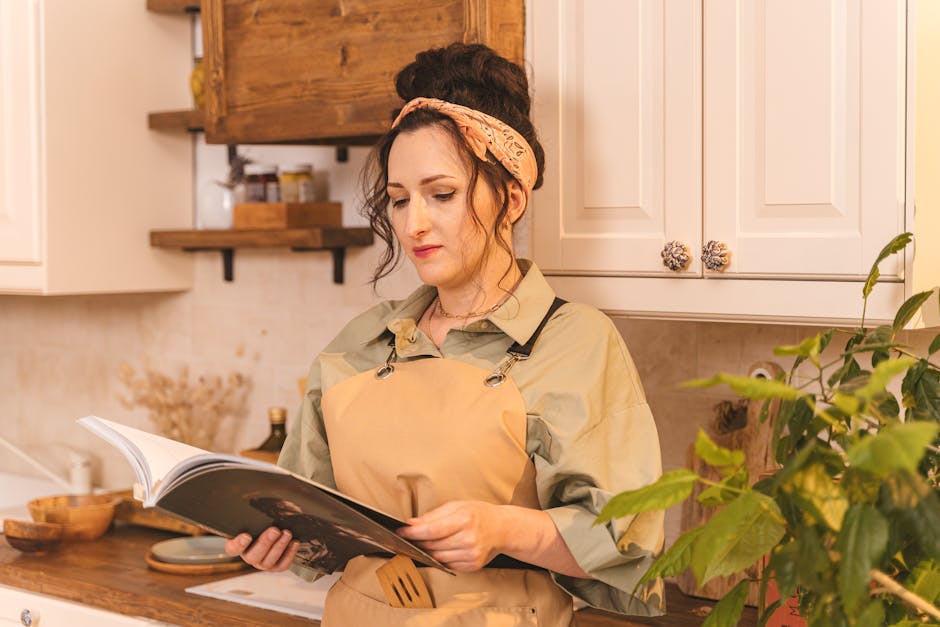
I’ve seen many friends buy a stack of the best cookbooks for beginners and then never actually cook from them. They sit on the shelf, pristine and intimidating. The problem is often that people try to ‘master’ the book instead of using it as a tool. My advice is to pick one book and commit to making three recipes from it in a single week. Don’t start with the hardest thing in the book. Start with the thing that looks the most like what you already eat. If you love pasta, find the basic tomato sauce recipe. If you’re a fan of a specific cocktail, start with the syrup-making chapter in a drink book. This builds a feedback loop: you do the thing, it tastes good, and you feel like a person who can actually cook.
The splatter test and making it your own
A clean cookbook is a sad cookbook. I used to be precious about my pages, but now I love seeing a faint oil stain on the page for my favorite vinaigrette. It’s a sign of progress. Don’t be afraid to write in the margins. If a recipe says it takes 20 minutes to prep but it took you 45 because your knife skills are still developing, write that down! If you found a drink was too sweet, note that you should cut the simple syrup by a quarter next time. These books are meant to be your personal logs. I also recommend using sticky tabs. I color-code mine: green for ‘must try,’ blue for ‘drinks to make for friends,’ and red for ‘tried and loved.’
Building a sustainable kitchen habit
Success in the kitchen—and at the bar—comes down to repetition. You will burn things. You will over-salt a soup. You will make a drink that tastes like cleaning fluid because you mixed up the ounces and the milliliters. That is part of the process. The books I have recommended here are chosen because they provide a safety net for those mistakes. They explain the mechanics so that when things go wrong, you can figure out why. Eventually, you’ll find yourself reaching for these books less for the instructions and more for the inspiration. You’ll know how to balance the acid in your glass and the salt on your steak without looking at a page, and that is the moment you stop being a beginner.
I also suggest looking at your kitchen space before buying. If you have zero counter space, maybe a digital version on a tablet is better, though I personally find physical books much easier to navigate when my hands are messy. Whatever format you choose, make sure it’s a book that makes you feel excited to get into the kitchen, not one that makes you feel like you’re studying for an exam. Cooking should be a joy, and the right book is the best way to unlock that.