Make a Small Living Room Look Bigger Without New Furniture

How can you make a small living room look bigger when the sofa, coffee table, and storage pieces are already paid for? Start with the layout, not the shopping list. Most cramped rooms have a sightline problem, a walking-path problem, or too many small visual breaks. Moving one chair can create more open floor than buying a narrow console ever will.
This guide focuses on changes you can make with furniture you already own. It also explains when a low-cost item may earn its place and when it will only add clutter. The goal is simple: make the room feel wider, brighter, and easier to move through without pretending that a 10-by-12-foot room can become a ballroom.
Why does a small living room feel smaller than its measurements?
The eye measures obstacles before it measures floor area
A room feels cramped when your eyes meet furniture, lamp cords, baskets, and dark corners every few feet. The usable space may be the same, but the visual path is broken. That is why a room with 120 square feet can feel tighter than another room with the same dimensions.
Stand at the entrance and look toward the farthest wall. Can you see a clean route across the room? If the answer is no, move the tallest object first. A bookcase, floor lamp, high-backed chair, or stack of storage bins may be blocking the room’s depth. Keep tall pieces on the perimeter and use lower pieces near the center. This creates a longer sightline from the doorway to the opposite wall.
Open floor matters more than empty walls
Many people push every piece against the wall and assume that creates space. It can do the opposite. A sofa pressed into a corner may force the coffee table into the main walkway, while a chair angled across the room may create a second barrier. Test each piece by leaving a walking route about 30 to 36 inches wide around the main traffic path.
Do not measure only the furniture. Measure the gaps between it. A 32-inch passage that runs in a straight line usually feels better than a wider path that zigzags around three objects. The strongest first move is to create one obvious route from the entrance to the seating area and another route to the window, balcony, or doorway. Clear movement makes a room feel larger faster than extra decoration does.
The best free change is therefore not a new color or a new storage bin. It is a cleaner visual axis and a predictable walking path.
What can you change in 30 minutes to open the room?
A five-step furniture reset
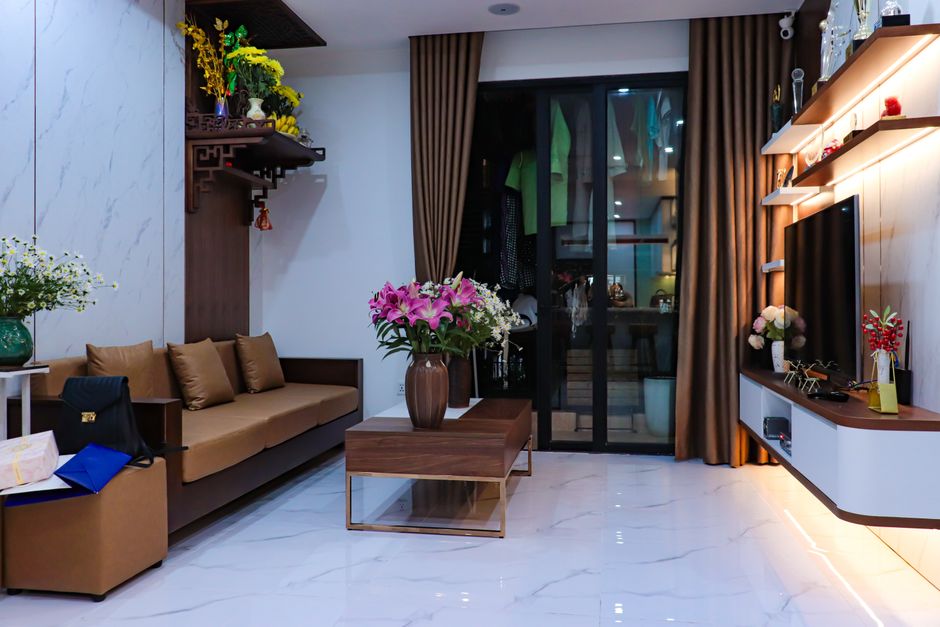
- Take a photograph from the doorway before moving anything. The camera exposes crowded corners that your eyes have started to ignore.
- Remove small objects from the floor, including baskets, footstools, plant stands, and loose stacks of magazines.
- Pull the sofa 2 to 4 inches away from the wall if the current position traps a walkway or blocks a baseboard vent.
- Move the coffee table so its longest side runs parallel with the sofa. Leave at least 16 inches between the table and seating for comfortable movement.
- Place one chair at an angle only if it points toward the conversation area. If it points into a walkway, move it to another room for the test.
Use the one-week removal test
Choose the three items you are least sure about and remove them for seven days. Do not throw them away. Store them in a closet or another room and track what you actually miss. Most people discover that they miss a useful lamp or a side table, not the decorative pile that occupied a corner.
Keep the room in its new arrangement for at least two evenings before judging it. Daylight can hide glare, awkward shadows, and blocked routes. At night, switch on every existing light and check the floor from the doorway. If one dark corner still draws your attention, change the lamp position or aim a light toward the wall instead of buying another fixture.
For a free reset, the winning order is removal, circulation, sightline, then decoration. Decorating first usually preserves the original problem.
Which layout change makes the biggest difference?
My strongest recommendation is to protect one long sightline from the entrance to the brightest part of the room. That single decision often beats a new rug, a new paint color, or a smaller coffee table because it changes what the eye sees the moment someone enters.
| Change | Target measurement | Likely effect | Verdict |
|---|---|---|---|
| Main walking route | 30–36 inches wide | Fewer visual interruptions | Do this first |
| Space around coffee table | 16–18 inches from seating | Easier movement without wasted floor | Keep the table if it fits |
| Furniture from wall | 2–4 inches when practical | Less boxed-in appearance | Useful, but not mandatory |
| Mirror placement | Opposite or beside a window | Reflects light and depth | Only buy one if the wall is clear |
| Floor items | Zero loose pieces in the route | Creates uninterrupted floor | Remove before shopping |
Why the table favors layout over décor
The measurements are modest, but they change the room’s function. A clear 34-inch path can make the same sofa feel less dominant. A mirror cannot fix a chair that blocks the entrance. A lighter lamp cannot fix a coffee table that forces everyone to walk sideways.
Bottom Line
Move the largest seating piece first, protect a straight route, and keep the center visually quiet. That is the highest-return change and it costs nothing.
Can mirrors, lighting, and color make the room look wider?
Should a mirror face the window?
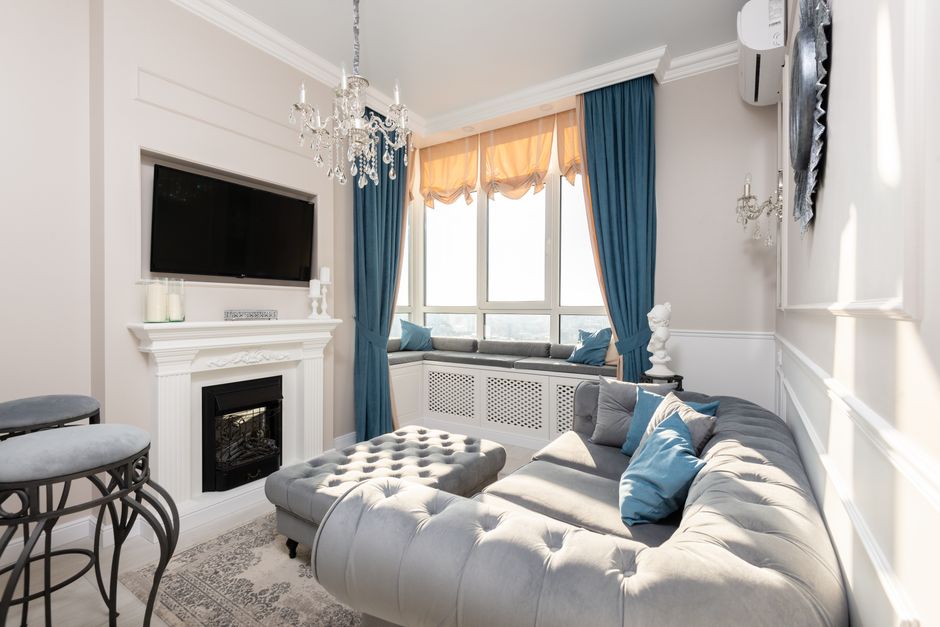
Usually, yes, if the window has a pleasant view and the reflected light does not create glare. A large vertical mirror can add height, while a horizontal mirror can stretch a narrow wall. The IKEA HOVET mirror, which measures about 30 3/4 by 77 1/8 inches, is a useful size reference for a tall wall, but the principle works with any mirror already in the house. Do not place one opposite a cluttered shelf or a blank wall if the reflection makes the room look busier.
Mount or lean the mirror securely. A leaning mirror may look relaxed, but it should not narrow the walking path or sit where a child or pet can knock it over. The mirror is helping only when it reflects light, open floor, or a useful architectural line.
What lighting change gives the most space for the money?
Use existing lamps to create three levels of light: one near the seating area, one aimed at a wall, and one near a darker corner. A wall wash makes the boundary of the room feel less harsh than a single ceiling light. If you already own a smart bulb such as the Philips Hue White Ambiance A19, its 800-lumen output and adjustable white tones can shift the room from cool task light to warmer evening light without adding a fixture. A similar ordinary bulb works if the smart bulb is not already in your home.
Do not make every bulb brighter. Excess brightness can flatten the room and create glare on screens. Aim for even light instead of maximum light.
Does a lighter color always make a room larger?
No. A pale wall can still feel cramped if the ceiling, trim, and furniture create sharp visual blocks. Paint the ceiling a light color, reduce the number of competing accent colors, and repeat one tone in curtains, cushions, or art. A quiet color plan is more reliable than choosing the palest possible paint.
The clear verdict is to use a mirror only where it reflects something attractive, use light to soften corners, and simplify color before buying paint. A mirror costs nothing if you already own one. If you do not, the IKEA HOVET is a real example at roughly $150 in many markets, but the layout still comes first.
What mistakes make a small living room look even smaller?
Four common errors to correct before buying anything
- Filling every corner: Empty corners are not wasted space. They give the eye a pause and help the room show its shape.
- Using several small rugs: Multiple rugs divide the floor into islands. If you own one large rug, place the front legs of the sofa and chairs on it so the seating group reads as one unit.
- Hanging art too high: Art that floats near the ceiling makes the wall feel disconnected from the furniture. Center the main artwork around 57 to 60 inches from the floor to its center, then adjust for seated viewing.
- Choosing storage by capacity alone: A tall open shelf may hold more, but every visible object adds another edge. Hide the least attractive items and leave some shelf space empty.
When to stop rearranging
Stop when the room has one clear route, one main focal point, and enough empty surface to set down a drink. Endless rearranging can become another form of clutter. If a piece is useful but visually heavy, try changing its position or removing objects around it before replacing it.
Do not put a mirror across from a messy command center, a television covered in cables, or a pile of laundry. Do not add a narrow table just because the wall looks empty. Do not push furniture into a dangerous pinch point to create a photograph that looks spacious from one angle.
The best failure test is practical: walk through the room while carrying a mug, open the window, vacuum the main route, and sit in every seat. If the new arrangement fails those tasks, it is not a better layout.
When is a small purchase worth making?
Buy only what removes a specific visual problem
This is where a skeptical budget matters. If rearranging solves the problem, stop there. If one missing item blocks the result, buy the smallest tool that fixes that exact issue. A Command Picture Hanging Strips large pack costs roughly $10 and can remove the need for a bulky floor-standing frame, but only use the strips within their stated weight limit and on suitable surfaces. They are not a substitute for secure hardware on heavy mirrors.
If the room stays dark after you move existing lamps, a single bulb may be enough. The Philips Hue White Ambiance A19 is commonly priced around $45, while a standard 800-lumen LED bulb may cost closer to $3–$8. The cheaper bulb wins if you only need brightness. The Hue wins only if adjustable color and app control solve a real daily problem.
Cash price beats decorative financing
For a mirror priced around $150, pay cash if the purchase fits your budget. A store card may advertise a promotional 0% APR, then revert to roughly 29.99%–34.99% APR after the promotion, with late fees that can reach $35. Buy-now-pay-later plans may show 0% APR but can charge late fees or create several payment obligations for one room accessory. No mirror is worth turning a small decorating project into revolving debt.
This is not financial advice. It is a simple spending rule: do the free layout work first, set a cash limit, and buy only the item that solves a measured problem.
Bottom Line
For a small living room that still feels cramped after rearranging, one correctly placed mirror or one better light source is the only purchase I would consider. The IKEA HOVET offers a large vertical reflection, a basic 800-lumen LED handles darkness for less, and Command strips can clear a floor by moving lightweight art onto the wall. None of them can rescue a blocked walkway.
The single most important takeaway is this: remove visual obstacles, create one clear path, and protect the longest sightline before spending a dollar.