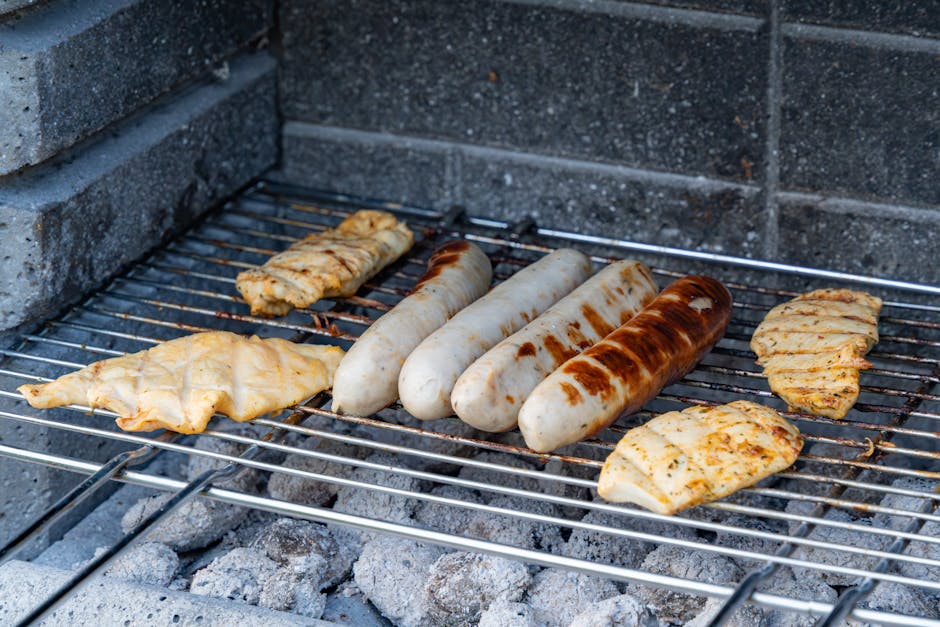
Stop overcomplicating your backyard BBQ and just buy a decent thermometer

If I smell lighter fluid coming from your backyard, I’m not coming over for dinner. I’m serious. It’s a chemical crime against a perfectly good piece of meat. People spend three hundred dollars on a fancy prime ribeye and then douse it in what is essentially jet fuel because they’re too impatient to use a chimney starter. It’s offensive.
I’ve been cooking over fire for about fifteen years now. I don’t have a culinary degree, and I don’t work for a food magazine. I’m just a guy who has ruined enough expensive brisket to know what actually matters when the smoke starts rolling. Most advice you find online is written by people trying to sell you a $2,000 pellet grill or a proprietary spice rub that’s 90% salt and paprika. Most of it is garbage.
The day I served my father-in-law a literal brick
It was July 2018. My father-in-law’s 60th birthday. I decided I was going to be the “pitmaster” of the family. I bought a 14-pound brisket from a local butcher—cost me about $95—and I stayed up all night. I had no idea what I was doing. I thought more smoke meant more flavor, so I kept throwing unseasoned hickory chunks onto the fire every twenty minutes. The air was thick and bitter. By noon, the temperature stalled, and I panicked. I cranked the heat to 350 degrees because I was hungry and embarrassed that lunch was late.
When I finally pulled it off, it looked like a meteor. I sliced into it and it didn’t even jiggle. It was dry, grey, and tasted like the inside of a chimney. My father-in-law, being a polite man, chewed a single piece for about three minutes before washing it down with a beer. He didn’t ask for seconds. Nobody did. I ended up ordering pizzas at 4:00 PM while my $100 brisket sat in the trash can. I felt like a total failure. That’s the thing about BBQ—it’s a humbling, slow-motion car crash if you don’t respect the process.
Pellet grills are for cowards (there, I said it)

I know people will disagree with this, and I’ll probably get emails about it, but pellet grills are just outdoor convection ovens. There. I said it. If you’re using a Traeger or a Camp Chef where you just turn a dial to 225 and walk away, you aren’t barbequing. You’re baking with wood-flavored electricity. There’s no soul in it. Part of the “best bbq tips” I can give you is to actually learn how to manage a fire. It’s supposed to be difficult. It’s supposed to require you to sit in a lawn chair with a cheap beer and poke at coals with a stick. If there’s no risk of you accidentally burning your eyebrows off or ruining the meal, it’s just cooking. It’s not an event.
I might be wrong about this—maybe I’m just a masochist—but the flavor you get from real hardwood charcoal and actual split logs is fundamentally different. It’s more aggressive. It’s more honest. I refuse to recommend those high-end pellet rigs to my friends because they make people lazy. You end up with meat that tastes “fine,” but it never tastes legendary. Legendary requires a bit of suffering.
Real BBQ isn’t about the equipment; it’s about how much you’re willing to babysit a fire that wants to die.
The 1.5% rule and why your meat is bland
What I mean is—actually, let me put it differently. Stop buying “BBQ Rubs” with names like Atomic Hog Heat or Cowboy Dust. You’re wasting your money on fancy labels. I’ve tested this over the last three years across roughly 50 different cooks: the only thing that actually penetrates the meat is salt. Everything else—the garlic powder, the onion powder, the mustard seed—just sits on the surface and creates the “bark.”
Here is the only technical data point you need: 1.5% salt by weight. If you have a 1,000-gram steak, you need 15 grams of kosher salt. I’ve tracked this in a spreadsheet (yes, I’m that person) and anything less feels under-seasoned, anything more is a salt lick. Also, you have to do it 24 hours in advance. If you salt a brisket five minutes before it goes on the smoker, you’ve already lost. The salt needs time to dissolve into a brine and work its way into the muscle fibers. It’s physics. You can’t rush physics.
- Dry brine everything. Even chicken. Especially chicken.
- Use 16-mesh black pepper. It’s the specific size that creates that crunchy, professional-looking bark.
- Ignore any recipe that tells you to use sugar on beef. Sugar is for pork. Putting sugar on a brisket is a sin.
Anyway, I once tried to make a “coffee rub” because I saw it on a YouTube channel. I used some expensive espresso beans I had in the kitchen. It was disgusting. It made the pork shoulder taste like a burnt Starbucks latte that had been left in a hot car. Never again.
The part where I tell you to stop touching things
If you’re lookin’, you ain’t cookin’. It’s a cliché because it’s true. Every time you lift the lid of your grill to see if the ribs look “done,” you’re dropping the ambient temperature by 50 degrees and adding ten minutes to your cook time. Stop it. Buy a decent wireless thermometer. I use a Thermoworks Signals because I’m a snob, but a $30 one from Amazon works too. Stick the probe in, close the lid, and go inside. Watch a movie. Talk to your family. Do literally anything else.
I used to think I could “feel” when meat was done by poking it with my finger. I was completely wrong. I’ve served chicken that was 140 degrees (dangerously raw) and pork that was 210 degrees (basically sawdust) because I thought I was a pro. You aren’t a pro. Use a thermometer. It’s the only way to be sure.
Trust the probe, not your ego.
One more thing—and this is my most unfair take—if you use a gas grill, I don’t really consider that BBQ either. It’s just a stove that lives outside. There’s no smoke, no charcoal, no flavor. It’s just… hot. If you want to cook a burger on a Tuesday night, fine. But don’t tell me you’re “barbequing.” You’re just heating up meat in the backyard. It’s boring. I’ve had the same $120 Weber Kettle since 2012 and it produces better food than most $1,500 gas setups. It’s beat up, the legs are wobbly, and the ash catcher is rusted through, but I’ll never get rid of it.
BBQ is supposed to be a little bit messy and a little bit frustrating. If you aren’t smelling like smoke for two days after the cook, did you even do it right? I don’t know why we obsess over this stuff. Maybe it’s just the primal need to control fire, or maybe it’s just the only time I feel like I’m actually making something with my hands instead of just typing on a laptop all day.
Will my father-in-law ever truly trust my brisket again? I’m honestly not sure.