Amaretto Sour

Is an Amaretto Sour just a sweet, syrupy drink that serious cocktail drinkers dismiss? The short answer — based on a close examination of documented recipe history and how working bartenders have adapted it — is no. When made correctly, with calibrated ratios, fresh citrus, and a quality amaretto, it is one of the more balanced sours in the classic repertoire. The problem is that most people have only encountered a poorly constructed version. What follows examines what the recipe actually requires, which amaretto brands perform best in it, and what the evidence shows about common preparation mistakes.
What Actually Goes Into a Classic Amaretto Sour
The Amaretto Sour belongs to the sour family of cocktails — a structure built on three elements: a base spirit or liqueur, citrus, and a sweetener. The ratio that has held up across documented cocktail literature is typically 2 parts liqueur to 1 part lemon juice, with sweetener adjusted to taste. For this drink specifically: 1.5 oz amaretto, 0.75 oz fresh lemon juice, and 0.25 oz simple syrup only if needed.
That said, the formula requires calibration. Amaretto is not a neutral spirit — it carries substantial residual sugar already built in. The sweetener element is partially pre-loaded. That is where many home bartenders go wrong: they follow a generic sour template and over-sweeten the drink before it reaches the glass.
The Standard Recipe and Why Ratios Matter
The commonly referenced baseline is 2:1 — amaretto to lemon juice. But amaretto varies meaningfully in sweetness across brands. Some versions run very sweet with heavy vanilla character; at a strict 2:1 ratio with any added syrup, the result typically reads as cloying. Most experienced bartenders have found that with sweeter amarettos, the syrup should be reduced to 0.125 oz or eliminated entirely.
The practical approach: taste the amaretto before building the drink. If it coats the tongue with sweetness immediately, treat the syrup as already incorporated. Adjust lemon juice upward — try 1 oz instead of 0.75 oz — and omit the syrup. The target balance is a drink that registers as sour first, sweet second.
Fresh Lemon Juice Is Non-Negotiable
Bottled lemon juice introduces a flat, slightly chemical quality that undermines the cocktail’s brightness. The sour family depends on high-acidity, aromatic fresh citrus, and bottled alternatives — even well-branded ones — generally lack the volatile compounds responsible for fresh citrus’s character. Most working bar programs have established fresh-squeezed as a minimum standard for documented reasons.
Roll your lemon on the counter before cutting: apply firm pressure and rock it back and forth for five to ten seconds. This breaks down the internal membranes and typically increases juice yield by 15–25% compared to pressing an unrolled fruit. One medium lemon generally produces 0.75–1 oz of juice — enough for one drink with minimal waste.
Simple Syrup — When to Use It and When Not To
Rich simple syrup (2:1 sugar-to-water ratio) is more efficient than standard 1:1 — you need less of it to achieve the same sweetening effect, which means less added water diluting the drink. If your amaretto runs dry and almond-forward, 0.25 oz of rich simple syrup rounds out the finish without pushing the drink into candy territory. With a sweeter amaretto, the evidence generally points toward skipping it entirely and letting the lemon do more work. Start with none and add from there — the opposite direction is harder to fix once it’s in the glass.
The Best Amaretto Brands for This Cocktail
The brand of amaretto you choose has a larger effect on the outcome than most home bartenders anticipate. The difference is not cosmetic. Here is how the most commonly available options compare across the relevant variables:
| Brand | ABV | Sweetness | Flavor Profile | Approx. Price (750ml) | Best Use |
|---|---|---|---|---|---|
| Disaronno Originale | 28% | High | Vanilla-forward, soft almond | $25–30 | Classic sweet sour; omit syrup |
| Lazzaroni Amaretto | 24% | Medium | Drier, genuine almond character | $20–25 | Modern sour, bourbon variation |
| Luxardo Amaretto di Saschira | 28% | Medium-High | Marzipan, cherry, fruity depth | $30–35 | Richer cocktails, dessert drinks |
| Caffo Amaretto | 30% | Medium | Almond, apricot, balanced | $18–22 | Budget-friendly, solid results |
| Gozio Amaretto | 28% | Medium | Smooth, slightly floral | $20–28 | All-purpose, well-balanced |
Disaronno is the most widely available and the bottle most guests will recognize — which matters when familiarity and ease of sourcing are priorities. However, practitioners of craft cocktail programs have generally found that Lazzaroni or Luxardo Amaretto di Saschira produce more complex, better-balanced results in a sour format. Lazzaroni, at roughly $20–25 per bottle, delivers genuine almond character without the heavy vanilla sweetness that makes Disaronno one-dimensional in this application.
Verdict: For a balanced craft Amaretto Sour, Lazzaroni is the clearest recommendation at this price point. If Disaronno is the only available option, compensate by increasing lemon juice to 1 oz and eliminating any added simple syrup.
Egg White: The Foam Question Has a Clear Answer
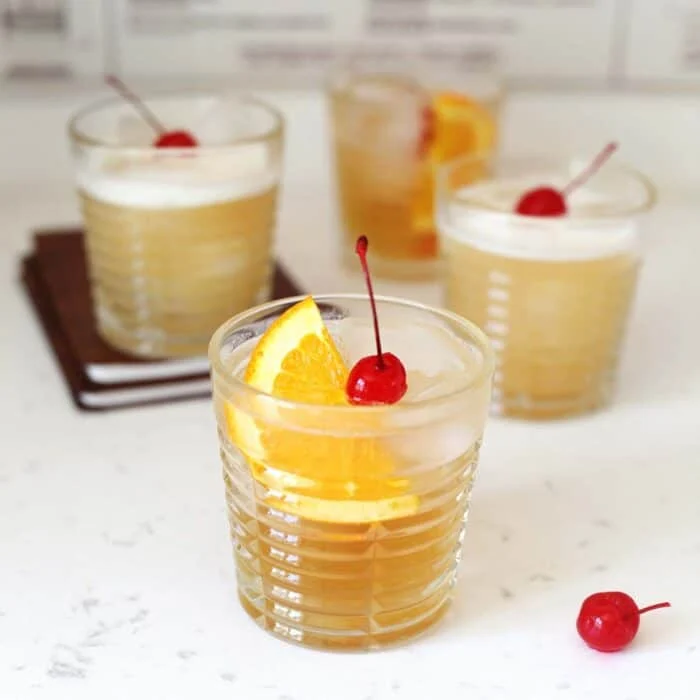
The egg white is not optional in a properly constructed Amaretto Sour. It provides the silky mouthfeel and stable foam layer that distinguish a craft sour from what is otherwise a juice cocktail. If raw egg is a concern — which is a reasonable one — aquafaba (the liquid drained from a standard can of chickpeas, roughly 0.75 oz per drink) performs comparably in dry shake applications and produces a stable, neutral-flavored foam. Bar programs including Death & Co. have confirmed this substitution holds up in practice. Use one or the other. Neither the drink’s texture nor its visual presentation works without it.
How to Make an Amaretto Sour: Steps That Work
The sequence matters here. Following these steps in order produces consistent results across different brands and conditions.
- Combine in a cocktail shaker: 1.5 oz amaretto, 0.75–1 oz fresh lemon juice (calibrated to your amaretto’s sweetness level), 0.25 oz simple syrup only if needed, and 0.75 oz egg white or aquafaba.
- Seal the shaker and dry shake — no ice — for 15–20 seconds. This aerates the egg white proteins before cold temperatures slow the process down.
- Open the shaker, add a full scoop of ice, seal again, and shake hard for 10–12 seconds.
- Double-strain through a Hawthorne strainer and a fine mesh strainer into the glass. The mesh catches ice chips that would otherwise disrupt the foam layer on the surface.
- Express a fresh lemon peel over the drink — hold it skin-side down and flex it sharply over the foam to release the oils. Rest the peel on the rim. This step adds aromatic dimension that most people notice without being able to identify its source.
Why the Dry Shake Comes First
Egg white aeration depends on protein unfolding — the mechanical action of shaking causes proteins to unfold and trap air bubbles. Cold temperatures inhibit this process. The dry shake protocol allows proteins to aerate at room temperature, building a more stable structure before ice is introduced. Adding ice for the second shake then chills and dilutes the mixture to drinking strength without collapsing the foam already developed. Most documented cocktail technique references, including the methodology outlined in David Arnold’s Liquid Intelligence, confirm this two-stage sequence produces superior and more consistent texture than any single-shake approach.
The Right Glass and Ice
A rocks glass with a single large ice cube is the standard presentation for a properly made Amaretto Sour. The large cube — ideally 2×2 inches — melts slowly, keeping the drink cold without rapid dilution. Tovolo Large Cube Trays (approximately $12–15 at most kitchen retailers) produce the correct format reliably. The Wintersmiths Phantom system produces clearer ice but costs significantly more — the clarity is aesthetic, not functional. A standard tumbler filled with crushed ice does not work for this drink; it dilutes too quickly and disrupts the foam layer before the drink is halfway finished.
The Morgenthaler Version: Better for Most People Than the Classic
The Jeffrey Morgenthaler variation of the Amaretto Sour is a more satisfying drink than the original — for anyone who does not specifically want a low-alcohol, very sweet cocktail. That is not a casual opinion. Morgenthaler, bar manager at Clyde Common in Portland and a widely documented figure in modern cocktail craft, reformulated the recipe after concluding that straight amaretto lacks the structural backbone to carry a properly balanced sour. His argument: at 28% ABV and high residual sugar, amaretto has nothing pushing back against the lemon. The result tends to be flat and one-dimensional — which is precisely why the drink spent decades with a reputation as a beginner cocktail rather than a serious entry in the sour category.
Jeffrey Morgenthaler’s Recipe
His formulation: 1.5 oz amaretto, 0.75 oz cask-strength or high-proof bourbon, 1 oz fresh lemon juice, 1 teaspoon rich 2:1 simple syrup, 0.75 oz egg white. The bourbon — he typically recommends something in the 95–101 proof range — introduces dry, oaky backbone that counterbalances amaretto’s sweetness and gives the drink structural depth it otherwise lacks.
Wild Turkey 101 (approximately $25 for 750ml) is a commonly recommended choice: its proof and price point make it practical for mixing, and its flavor profile — spice, vanilla, oak — complements amaretto without competing with it. Buffalo Trace (approximately $30) is a slightly softer option that some practitioners prefer for its pronounced vanilla and caramel notes, which reinforce amaretto’s character rather than contrasting it. Either works. A low-proof, mild bourbon does not — it gets lost in the liqueur entirely and the point of the modification disappears.
When to Stick with the Classic
The Morgenthaler version is not always the right call. For guests who want a lower-alcohol drink, or who dislike whiskey, the classic all-amaretto format is the appropriate choice. The bourbon addition raises the overall ABV meaningfully and introduces a flavor element not everyone welcomes. Know your audience. For a cocktail-literate group, the modern version is the stronger, more interesting drink. For guests who want something light and approachable, the original serves its purpose without complication — and there is nothing wrong with that.
Mistakes That Quietly Ruin This Cocktail
Does the brand of amaretto actually change the outcome?
Yes — and the difference is larger than most people expect before conducting a side-by-side comparison. Disaronno Originale and Lazzaroni Amaretto produce noticeably different drinks even when all other variables are held constant. Disaronno’s high sugar content and vanilla-dominant flavor push the drink toward sweetness; Lazzaroni’s drier, more almond-forward character produces a cleaner, more complex result. The choice of amaretto is arguably the single most consequential variable in this cocktail — more so than technique, glassware, or any other factor.
What happens if you skip the dry shake?
The foam fails. Without dry shaking, egg white proteins do not aerate adequately, and the resulting foam layer is thin, unstable, and collapses quickly. The textural experience — one of the primary reasons to include egg white in the first place — is substantially diminished. Some practitioners have experimented with pre-aerating the egg white using an immersion blender before adding it to the shaker. This partially compensates. Most evidence, however, suggests the standard two-stage shake produces more consistent and stable foam than any shortcut method currently documented.
Can you use bottled lemon juice?
You can. The drink will be noticeably worse. Bottled lemon juice typically contains preservatives and lacks the aromatic volatile compounds present in freshly squeezed juice. In a sour, where citrus is doing structural work rather than simply adding tartness, this difference registers clearly in the finish. Fresh lemon adds roughly 60 seconds of effort and produces a substantially better result. Most professional bartenders settled this question years ago in practice.
Adding too much simple syrup
This is the most common single mistake, particularly with sweeter amaretto brands. Because amaretto is already a sweetened liqueur, adding 0.5 oz of simple syrup — a typical measure in generic sour recipes — pushes the drink past balance into something that reads more like a cordial than a cocktail. Start with no added syrup. Add 0.25 oz only after tasting and determining it is too tart. Adjust from that baseline rather than from a preset formula. The difference between a balanced Amaretto Sour and a cloying one is often just that single decision made before the ice goes in.