Tequila Sunrise

Picture this: you’ve planned a casual brunch or an evening gathering. You decide to make a round of Tequila Sunrises. You layer the grenadine, thinking you’ve got it down. But instead of that vibrant, distinct gradient, you end up with a murky, reddish-orange mess. The drink is too sweet, or maybe too boozy. It’s a common scenario. Achieving a truly impressive Tequila Sunrise isn’t just about mixing ingredients; it’s about technique, quality, and understanding how each component interacts. We’ll show you how to move past those disappointing attempts and craft a cocktail that looks and tastes exactly right.
The Essential Ingredients: Beyond Basic Brands
Crafting a superior Tequila Sunrise begins with the right foundation. This isn’t a cocktail where you can skimp on ingredient quality and expect stellar results. The vibrant color and balanced flavor hinge directly on your choices. Many home bartenders default to whatever is cheapest or most available. That’s a mistake. A truly great Tequila Sunrise demands a thoughtful selection of its core components.
Choosing the Right Tequila Base
For a classic Tequila Sunrise, **Tequila Blanco** is the undisputed champion. It’s unaged, clear, and offers a crisp, pure agave flavor that doesn’t compete with the fruit notes. Anejo or even Reposado tequilas, while excellent in other applications, bring barrel-aged characteristics like oak or vanilla that can muddy the clean, bright profile of the Sunrise.
- Our Recommendation for Blanco Tequila: For an accessible yet high-quality option, Espolòn Tequila Blanco is consistently excellent. It delivers a smooth, clean agave taste without harshness. If your budget allows for an upgrade, Patron Silver offers a noticeably refined, peppery finish that elevates the drink further. Avoid anything labeled “gold” unless it explicitly states it’s 100% agave, as many are mixto tequilas with added caramel coloring and sugars that will detract from your cocktail.
The Orange Juice Standard
You need **high-quality orange juice**. Period. Forget the concentrate from a carton that’s been sitting in the back of the fridge. Freshly squeezed orange juice is ideal, offering a brighter, more natural sweetness and acidity. If fresh squeezing isn’t an option, opt for a premium, not-from-concentrate brand. Look for juice with some pulp for a more authentic texture and flavor profile.
- Our Recommendation for Orange Juice: Simply Orange High Pulp is a readily available, excellent choice. It tastes remarkably close to fresh-squeezed and provides the necessary body. Avoid highly sweetened or artificial orange drinks; they will make your cocktail cloyingly sweet and detract from the fresh fruit essence. The juice provides the bulk of the drink’s volume and much of its flavor, so this is not a place to compromise.
Grenadine: Color and Taste
Grenadine is more than just red syrup. Its role is twofold: it provides the iconic color gradient and contributes a subtle, tart-sweet pomegranate flavor. Many commercial grenadines are simply high-fructose corn syrup with red dye. These will make your drink overly sweet and give it an artificial tint.
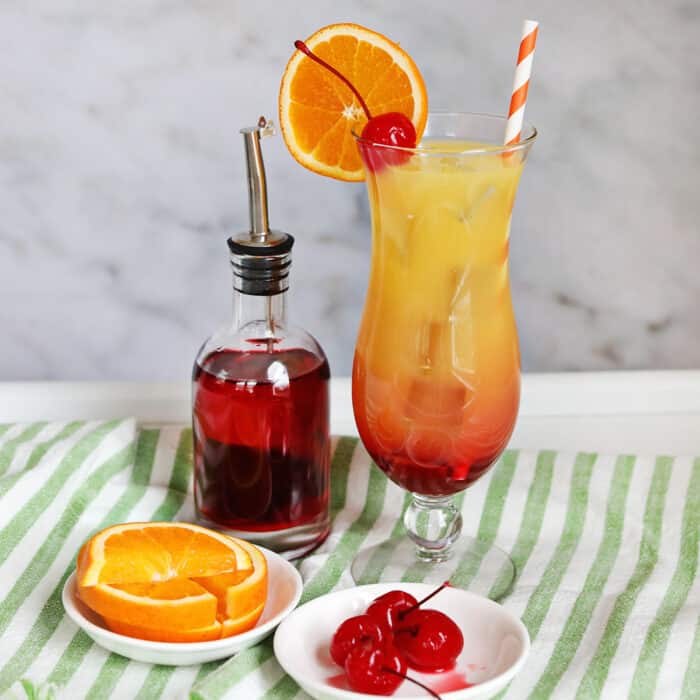
- Our Recommendation for Grenadine: Invest in a quality grenadine like Monin Grenadine Syrup. It uses real pomegranate juice concentrate, delivering a deeper, richer color and a more nuanced flavor. The difference is immediately apparent. Just a small amount creates that vibrant **grenadine gradient** without overwhelming the other flavors.
Mastering the Pour: Layering for That Iconic Look
The visual appeal of a Tequila Sunrise is half its charm. That distinct, sunset-like gradient isn’t magic; it’s precise technique. Many attempts result in a muddled, uniform color, completely missing the point. Achieving those clean layers requires attention to detail, from your glass choice to the angle of your pour. This is where patience and a steady hand pay off.
Selecting the Correct Glassware
Your choice of glass significantly impacts the visual outcome. A tall, straight-sided glass provides the ideal canvas for the grenadine to sink and create its gradient. Avoid wide, squat glasses, as they make it difficult for the grenadine to fall cleanly through the orange juice and tequila mixture.
- Our Recommendation for Glassware: A classic highball glass, like the Libbey Classic Cooler Glass (16oz), is perfect. Its height and relatively narrow opening ensure the grenadine has enough distance to create a beautiful, distinct layer at the bottom. The clarity of the glass is also important; crystal clear glass allows the colors to shine through without distortion.
The Critical Role of Ice
Before any liquid touches the glass, fill it completely with fresh, solid ice cubes. This isn’t just about chilling the drink. The ice displaces volume, which helps the grenadine sink in a more controlled manner. It also keeps the drink colder longer, slowing dilution. Using too little ice, or crushed ice, can lead to a less defined gradient and a watery drink.
- Ice Preparation: Use large, solid cubes. Avoid hollow or small ice cubes that melt quickly. Chill your glasses beforehand in the freezer for 10-15 minutes if possible. This keeps the drink colder from the start, preserving its integrity and presentation for longer.
Executing the Grenadine Drop Technique
This is the moment of truth for the perfect gradient. After filling your glass with ice and adding the tequila and orange juice, you add the grenadine. Do not just pour it directly onto the drink’s surface. This will cause it to mix too quickly and create that muddy effect.
- The Pour: Take your bottle of grenadine.
- The Tool: Use a **bar spoon**. Turn the spoon bowl-side down, so the convex back faces upward. Place the tip of the spoon just above the surface of the drink, against the ice.
- The Drizzle: Slowly drizzle the grenadine over the back of the spoon. The spoon acts as a ramp, gently dispersing the heavy syrup down through the orange juice. It will slowly sink to the bottom, creating that stunning red layer and the desired orange-to-red transition.
- Amount: Typically, 1/4 to 1/2 ounce of grenadine is sufficient. Adding too much will make the drink overly sweet and create a too-thick bottom layer.
- No Stirring: Crucially, once the grenadine is added, do not stir the drink. The beauty is in the untouched layers. If you want a slight mix, it should happen naturally as you drink.
Common Tequila Sunrise Mistakes and How to Avoid Them
Even with good ingredients, mistakes in preparation can ruin a Tequila Sunrise. Many home bartenders encounter the same pitfalls that prevent their drinks from looking and tasting their best. Identifying these common errors and knowing how to sidestep them is crucial for consistent success. We’ve outlined the most frequent missteps and provided clear solutions.
- Mistake 1: Muddled Colors, Not a Gradient.
The Fix: This happens when grenadine is poured too quickly or directly into the drink without a proper technique. As detailed in the previous section, always use a **bar spoon** to gently guide the grenadine down the side of the glass, allowing it to sink naturally. Ensure the drink is already cold with plenty of ice. The density difference between the cold grenadine and the warmer tequila/OJ mixture is what s the layering. - Mistake 2: Overly Sweet or Syrupy Taste.
The Fix: This is often due to using too much grenadine or a low-quality, sugar-heavy grenadine. Stick to 1/4 to 1/2 ounce of a high-quality, pomegranate-based grenadine. Also, ensure your orange juice is 100% juice, not a sweetened drink or cocktail blend. The sweetness should come primarily from the orange juice, with grenadine adding a subtle tartness and color. - Mistake 3: Weak or Watery Flavor.
The Fix: This can result from using too little tequila, too much ice that melts too quickly, or poor-quality orange juice. Ensure you’re using the correct tequila-to-orange juice ratio (typically 1.5 to 2 ounces tequila per 4 ounces orange juice). Use solid, large ice cubes to minimize rapid dilution. And again, opt for premium, not-from-concentrate orange juice for robust flavor. - Mistake 4: Tequila Flavor is Too Harsh.
The Fix: If the tequila is overpowering, you might be using a lower-shelf mixto tequila, or the ratio is off. Invest in a decent **Tequila Blanco** (like Espolòn). Balance is key. Adjust the tequila amount slightly if needed, but remember a Tequila Sunrise should still taste like a tequila cocktail, just a very refreshing one. A splash of soda water (like club soda) can also mellow a harsh edge without diluting flavor too much. - Mistake 5: Lack of Chill.
The Fix: Serving a Tequila Sunrise lukewarm is a major error. It should be served very cold. Always use plenty of ice in the glass. Consider chilling your tequila in the freezer for 30 minutes before mixing, and your orange juice should always be refrigerated. A cold drink not only tastes better but also helps maintain the visual gradient longer.
Tequila Type Comparison: Blanco vs. Reposado for Your Sunrise
While a classic Tequila Sunrise traditionally calls for **Tequila Blanco**, some drinkers explore other options. Understanding the distinct characteristics of different tequila types is crucial before deviating from the standard. Each type brings a unique set of flavors and aromas that can significantly alter the final cocktail. Here’s how Blanco and Reposado stack up, allowing you to make an informed choice based on your preference.
Flavor Profile Differences
The aging process is the primary differentiator between tequila types, directly impacting their flavor. Blanco tequilas are bottled immediately or rested for a very short period (up to two months). Reposado tequilas are aged in oak barrels for two months to a year.
| Tequila Type | Aging Process | Flavor Characteristics | Best for Tequila Sunrise? |
|---|---|---|---|
| Tequila Blanco | Unaged or rested up to 2 months. | Clean, crisp agave. Herbal, peppery, citrus notes. | Yes. Its purity allows orange and grenadine to shine. |
| Reposado Tequila | Aged 2 months to 1 year in oak barrels. | Smoother, hints of vanilla, caramel, oak, spice. Agave is still present but mellowed. | Potentially. Adds complexity, but can overshadow fruit. |
Blanco Tequila offers a bright, direct agave punch. This clean profile means the fresh orange juice and the tart sweetness of the grenadine are the dominant flavors, with the tequila providing a firm, spirited backbone. It’s the choice for those who want a refreshing, fruit-forward drink where the tequila supports rather than dominates.
Reposado Tequila, on the other hand, introduces a layer of complexity. The oak aging imparts notes of vanilla, caramel, and sometimes a hint of baking spice. When used in a Tequila Sunrise, these flavors will be noticeable. The drink will be less purely fruit-forward and gain a richer, more mellow character. Some find this enjoyable for a more sophisticated version, but it can also make the drink taste less “sunny” and vibrant, potentially clashing with the bright grenadine.
Visual Impact
While Blanco tequila is clear, reposado tequila has a pale golden hue from its barrel aging. This slight color difference can subtly impact the overall visual clarity and vibrancy of your Tequila Sunrise. A clear Blanco ensures the pure orange and red gradient stands out. A reposado’s light golden tint might slightly warm the orange layer, but it generally won’t detract significantly from the famous color separation.
Our Verdict: Stick with **Tequila Blanco** for the classic, bright, and refreshing Tequila Sunrise. If you prefer a richer, more complex cocktail and don’t mind the oak notes interacting with the fruit, a Reposado can be an interesting experiment. But for the iconic taste and visual, Blanco remains the superior choice.
Optimizing Your Serve: Questions Answered
Once you’ve mastered the ingredients and the pour, a few lingering questions often arise about perfecting the serving experience. Should you stir it? What’s the best garnish? Can you make a big batch for a crowd? Getting these details right ensures your Tequila Sunrise is not just a drink, but a complete experience. We’ll answer these common inquiries to help you serve with confidence.
Should You Stir a Tequila Sunrise?
No. You absolutely should not stir a Tequila Sunrise. The entire aesthetic appeal of the drink is built around the distinct, unmixed layers of orange juice and grenadine. Stirring immediately defeats the purpose, turning your beautiful gradient into a uniform, muddled orange-red liquid. The idea is for the drinker to experience the flavor transition as they sip, moving from the orange-tequila blend to the sweeter grenadine at the bottom.
Why Not Stir: The layering creates a visual spectacle and a dynamic flavor profile. The heavier grenadine naturally settles, and the drink is designed to be consumed with this natural progression. If guests prefer a more uniform taste, they can lightly swirl their own drink after a few sips, but it should never be stirred upon serving.
What’s the Best Garnish?
A simple, elegant garnish is all a Tequila Sunrise needs. It should complement the drink’s colors and flavors without being overwhelming. The most classic and effective options are those that echo the fruit components.
- Orange Slice or Wheel: This is the traditional and arguably best garnish. A fresh orange slice or wheel perched on the rim of the glass, or even dropped directly into the drink, reinforces the primary flavor and bright color.
- Maraschino Cherry: A single maraschino cherry, dropped into the drink, can sink to the bottom and add another pop of color, enhancing the “sunrise” effect. Just ensure it’s a good quality cherry, not one that tastes overly artificial. Avoid overloading the drink with multiple cherries; one is sufficient.
- Mint Sprig: For an unexpected aromatic twist, a small sprig of fresh mint can add a refreshing fragrance without altering the core flavors. This works particularly well if you’re looking for a slightly more sophisticated presentation.
Avoid: Overly elaborate garnishes. The beauty of the Tequila Sunrise lies in its simplicity and vibrant colors. A lemon or lime slice might clash with the orange and grenadine flavors.
Can I Batch Tequila Sunrises for a Party?
Yes, but with an important caveat regarding the grenadine. You can absolutely pre-mix the tequila and orange juice base in a large pitcher or dispenser. This saves significant time when entertaining a crowd.
Batching Strategy:
- Pre-Mix the Base: Combine your desired ratio of **Tequila Blanco** and **high-quality orange juice** in a large, chilled container. Store this in the refrigerator until ready to serve.
- Individual Grenadine Pour: When a guest wants a drink, fill their glass with plenty of ice. Pour the pre-mixed tequila and orange juice base into the glass. Then, and this is crucial, add the grenadine individually using the bar spoon technique directly into each glass.
Why Not Batch Grenadine: If you add the grenadine to the large batch, it will simply sink to the bottom and create a uniform pinkish-orange mixture, losing the signature gradient effect. The magic of the Tequila Sunrise is in that final, separate pour of grenadine into each individual, ice-filled glass. This method ensures every guest receives a perfectly layered, visually stunning cocktail without you needing to measure out each component from scratch for every drink.
Mastering the Tequila Sunrise is about respecting its simplicity while executing its steps with precision. The right ingredients, a careful pour, and an understanding of its unique characteristics will consistently deliver a drink that impresses. Enjoy crafting your perfect pour.