Vegetarian Slow Cooker Recipes: Vegetarian Slow Cooker Meals That Don’t Turn to Mush

You set the slow cooker at 8 a.m. Walk in the door at 6 p.m. expecting a fragrant, complex stew. Instead, you get a homogenous pot of brown matter where the carrots, lentils, and potatoes have achieved a textural ceasefire — all equally soft, equally bland. The flavor is there, somewhere, buried under the steam and the long, wet heat. Vegetarian slow cooker recipes have a reputation for this. It’s not the appliance’s fault. It’s a timing problem.
Meat has collagen and fat that melt over hours, creating body and richness. Vegetables and legumes don’t have that safety net. They break down on a predictable schedule, and if you ignore that schedule, you get mush. The fix isn’t more salt or a better brand of vegetable broth. The fix is understanding when each ingredient enters the pot.
Why Most Vegetarian Slow Cooker Recipes Produce Flavorless Sludge
The slow cooker is a wet, low-heat environment. Over 6 to 8 hours, plant cell walls — made of pectin and cellulose — absorb water, swell, and eventually rupture. This is why a carrot turns soft. A lentil dissolves. A potato goes from waxy to mealy to paste. In meat-based cooking, this breakdown is desirable because connective tissue converts to gelatin. In vegetarian cooking, there’s no gelatin to be had. You’re left with starch-thickened water and vegetable fibers.
The second problem is flavor volatility. Many aromatic compounds in vegetables and herbs are highly volatile — they evaporate or degrade with prolonged heat. That fresh basil you added at hour one? Gone. The garlic’s sharpness? Muted into a sweet, ghostly hum. Slow cookers trap steam, which drips back down into the pot, diluting whatever broth you started with. The result is a watery, over-extracted liquid that tastes vaguely of all vegetables and specifically of none.
A 2026 study in the Journal of Food Science found that allicin — the compound responsible for garlic’s pungency — degrades by over 90% after 6 hours at 85°C (185°F), which is the low setting on most slow cookers. This isn’t a minor loss. It fundamentally changes the flavor profile of the dish.
A Timing Matrix for Vegetables and Legumes
Treat your slow cooker like a reverse cooking timeline. You’re not adding everything at once. You’re adding ingredients based on how long they need to reach ideal texture, not maximum breakdown.
| Ingredient | Ideal Cook Time (Low) | Add to Pot | Failure Mode |
|---|---|---|---|
| Brown lentils | 2.5–3 hours | Last 3 hours | Dissolves into paste |
| Green/Puy lentils | 3–4 hours | Last 4 hours | Holds shape better; still over-softens |
| Chickpeas (canned) | 2–3 hours | Last 3 hours | Turns grainy, skins separate |
| Chickpeas (dried, soaked) | 5–6 hours | Start of cook | Undercooked if added late |
| Potatoes (waxy, like Yukon Gold) | 3–4 hours | Last 4 hours | Mealy, disintegrating texture |
| Carrots (1-inch chunks) | 4–5 hours | Last 5 hours | Mushy, flavorless |
| Mushrooms (cremini, portobello) | 2–3 hours | Last 3 hours | Rubbery then slimy |
| Kale, chard, spinach | 15–30 minutes | Last 30 minutes | Bitter, grey, slimy |
| Onions, garlic (aromatics) | 20–30 minutes | Sauté first, add at end | Sweet but flat; no pungency |
This table is your primary defense against texture collapse. Tape it inside a kitchen cabinet. The core principle: dense, dried legumes go in early; everything else goes in late. If you’re gone all day, use a programmable slow cooker like the Hamilton Beach Set & Forget ($60) that switches to warm after a set time. Add the quick-cooking ingredients in the morning, set the timer for 3–4 hours on low, and let it hold on warm until you return.
Layered Flavor Without the 8-Hour Simmer
You can’t rely on long cooking to build flavor in vegetarian dishes. You have to build it before the pot lid closes and after it opens. This means front-loading and back-loading aromatics.
Front-loading: Sauté onions, garlic, ginger, or tomato paste in a pan before they enter the slow cooker. This step takes 5 minutes and creates the Maillard browning that a slow cooker can’t achieve. The Crock-Pot brand itself admits in its user manuals that its stoneware doesn’t get hot enough for browning — it maxes out around 209°F (98°C) on high, below the 280°F (138°C) needed for meaningful Maillard reactions. If your recipe says “add raw onions and garlic to the pot,” it’s a bad recipe. Disregard it.
Back-loading: Fresh herbs, citrus juice, vinegar, a drizzle of good olive oil, toasted nuts, or a spoonful of pesto go in at the very end — after the heat is off. These are your high-volatility flavor agents. They don’t need cooking; they need to land on the surface of the finished dish where your nose can detect them immediately. A stew finished with a tablespoon of sherry vinegar and a handful of chopped parsley tastes entirely different from one that had those ingredients simmered for hours.
For broth, skip the pre-made vegetable stock for long-cooked dishes. Most commercial stocks — even the $5-a-quart ones from the refrigerated section — break down into a thin, metallic-tasting liquid after 6 hours. Use water plus a concentrated flavor base instead: a few dried shiitake mushrooms, a strip of kombu, a tablespoon of miso paste stirred in at the end, or a parmesan rind (if you’re not vegan). The rind from a wedge of Parmigiano-Reggiano ($18/lb at most grocers) adds glutamates and body without dairy heaviness. One rind can be frozen and reused across 3–4 cooks.
Three Recipes That Obey the Timing Rules
1. Coconut-Turmeric Chickpea Stew (Vegan)
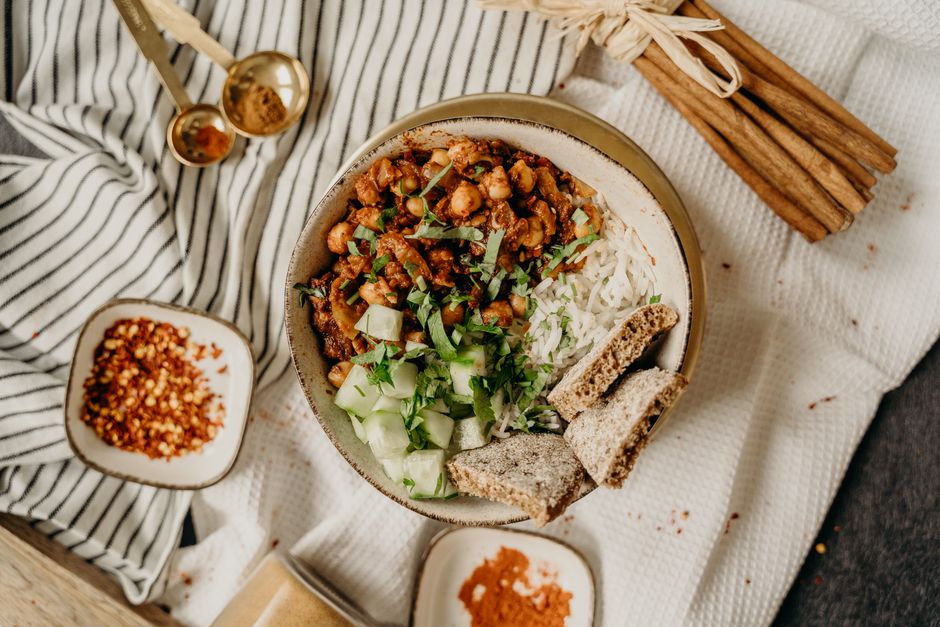
Soak 1 cup dried chickpeas overnight. Add to slow cooker with 3 cups water, 1 can full-fat coconut milk (Chaokoh brand, $2.50), 1 tablespoon turmeric, 1 teaspoon cumin, and a 2-inch piece of ginger sliced into coins. Cook on low for 5 hours. At hour 5, add 2 cups 1-inch carrot chunks and 1 cup diced Yukon Gold potatoes. Cook 1 more hour. Before serving, remove ginger coins, stir in juice of 1 lime, 1 teaspoon salt, and top with cilantro and toasted coconut flakes.
2. Mushroom and Farro Risotto-Style Stew
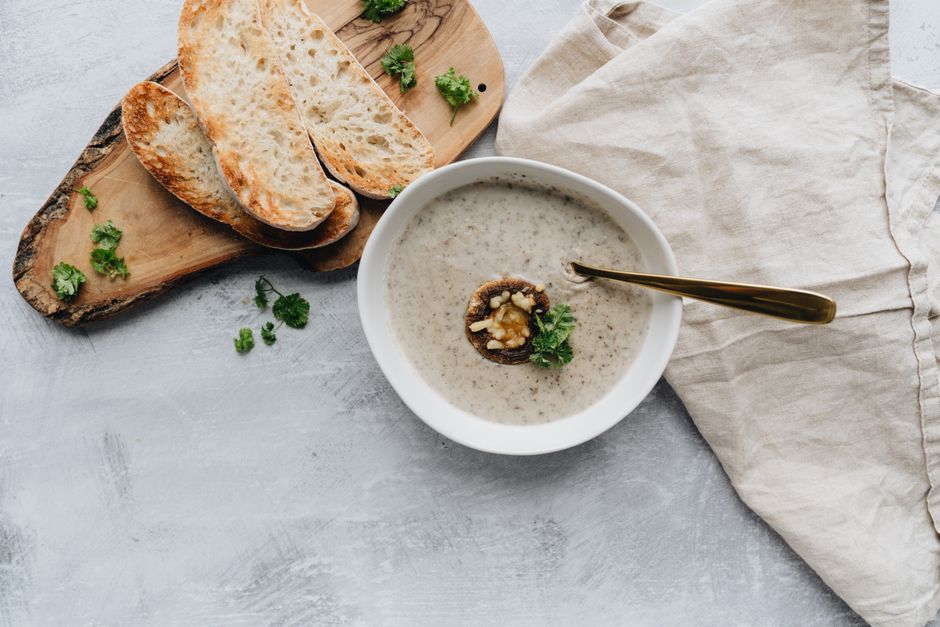
Sauté 1 diced onion and 3 minced garlic cloves in 2 tablespoons olive oil until browned. Transfer to slow cooker. Add 1 cup farro (Bob’s Red Mill, $4), 4 cups water, 1 ounce dried porcini mushrooms, and 1 tablespoon soy sauce. Cook on low 3 hours. At hour 3, add 2 cups quartered cremini mushrooms. Cook 1 more hour. Stir in 2 tablespoons butter and 1/3 cup grated Parmigiano-Reggiano. Farro stays chewy where rice would turn to paste — it’s the better grain for slow cooking.
3. Smoky Black Bean Soup with Quick-Pickled Onions
Add 1 pound dried black beans (no soak needed), 6 cups water, 2 bay leaves, and 2 canned chipotle peppers in adobo (La Costeña, $1.50) to the slow cooker. Cook on low 6 hours. At hour 5.5, add 1 tablespoon salt. Once done, remove bay leaves. Blend one-third of the soup with an immersion blender and stir back in for body. Serve topped with quick-pickled red onions (thinly sliced, soaked in lime juice and salt for 10 minutes) and crumbled cotija cheese. The acidity from the onions cuts through the long-cooked bean richness in a way that sour cream doesn’t.
When Not to Use a Slow Cooker for Vegetarian Food
The slow cooker is a tool. Not a universal solution. There are specific vegetarian dishes where it does more harm than good.
Don’t use it for: delicate greens as a main ingredient (spinach, arugula), quick-cooking grains (quinoa, white rice, couscous), dairy-heavy sauces (cream curdles over 4+ hours), pasta (turns to glue), or anything you want to taste bright and fresh. A spring pea soup should take 20 minutes on the stovetop. In a slow cooker, it becomes army-green sludge.
Use a pressure cooker instead when you want deep flavor fast. The Instant Pot Duo Plus ($90) hits 242°F (117°C) at high pressure, which does produce Maillard browning — especially if you sauté in the pot first. A vegetarian chili that takes 6 hours in a slow cooker takes 25 minutes under pressure, with better texture retention in the beans and peppers. The tradeoff is attention: you can’t leave a pressure cooker unattended all day. But for evening cooking, it’s the superior tool for vegetarian food.
Use a Dutch oven when you’re home and want control. A 5.5-quart Le Creuset ($370) or the functionally identical Lodge enameled cast iron ($80) lets you brown, deglaze, simmer, and reduce — all in one pot — with total control over heat levels. You can start a stew on the stove, move it to a 300°F oven, and pull it out when the vegetables are exactly where you want them. The slow cooker’s advantage is convenience, not quality. If you’re home, the Dutch oven makes better food.