The Role of Ice in Cocktail Preparation for Perfect Chill and Dilution

The Science Behind Ice in Cocktails
Ever wonder why your perfectly mixed cocktail sometimes tastes off when the ice melts too fast—or not enough? Here’s the truth: ice chills drinks by melting, and there’s no real chilling without a bit of dilution. That’s the first key to mastering your cocktail game.Why Dilution Matters
Controlled dilution isn’t just about watering down your booze. It’s essential for:- Softening harsh alcohol notes, making your drink smoother and easier to sip.
- Integrating flavors so every ingredient blends beautifully.
- Opening aromas that transform the cocktail’s character as you drink it.
What Controls Ice Melt Rate?
Not all ice melts equally. The melt rate depends on:- Surface area: More surface means faster melt. Crushed ice chills quicker but dilutes faster.
- Size and shape: Large cubes or spheres melt slowly, ideal for spirit-forward sips.
- Temperature: Ice straight from a freezer freezes harder and lasts longer.
- Quality: Clear, pure ice melts slower and tastes cleaner compared to cloudy or impure ice.
Busting Ice Myths
- Myth: Dilution ruins cocktails. Nope! A good cocktail always needs the right water content.
- Myth: More ice means less dilution. Actually, more ice surface speeds up melting—so pick the right type for your drink.
Types of Ice and Their Characteristics
Ice plays a huge role in cocktail preparation, and different types of cocktail ice serve specific purposes. Here’s a quick guide to the most common ice types and what makes them stand out:| Ice Type | Size/Shape | Key Traits | Best Use |
|---|---|---|---|
| Standard Cubes | 1–1.5 inches | Versatile, easy to make, moderate melt rate | Shaking, stirring, general use |
| Large Cubes/Blocks | 2+ inches | Slow melting, minimal dilution | Spirit-forward cocktails |
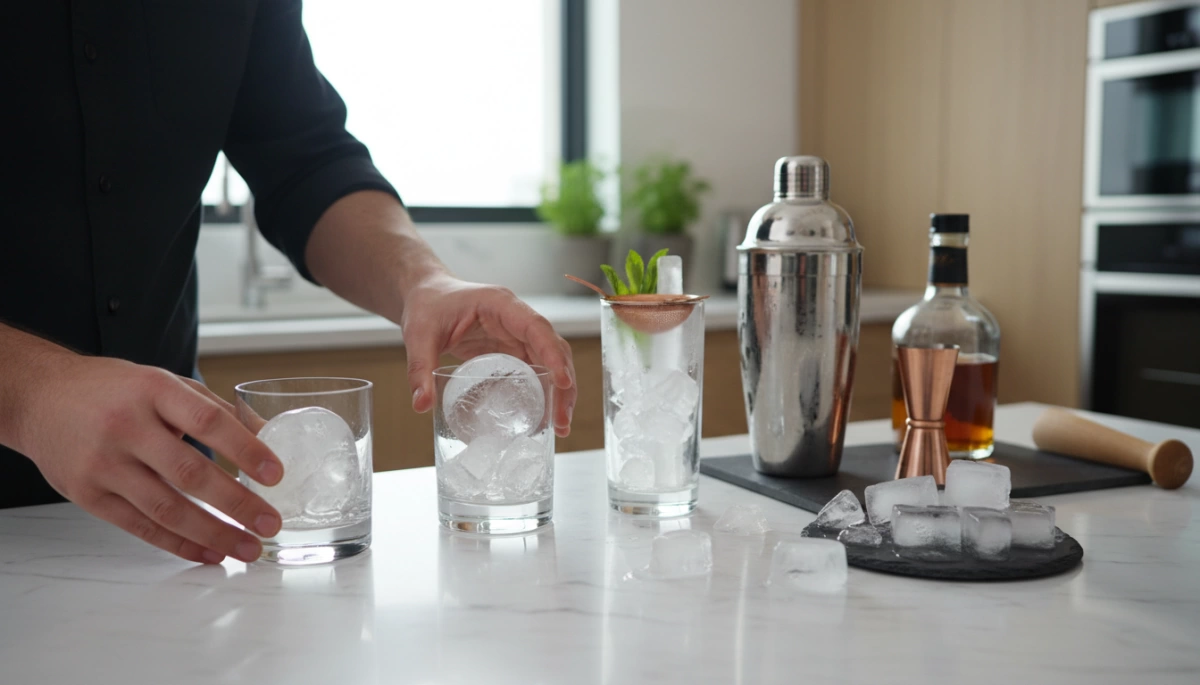
| Ice Spheres | Round, ~2 inches | Lowest surface-to-volume ratio, slow dilution | Elegant serve, preserves strength |
| Crushed/Pebble Ice | Small fragments | Fast chilling, high dilution, textured | Refreshing drinks, swizzles, mojitos |
| Collins Spears/Shards | Long, thin pieces | Fits tall glasses, cools without quick melt | Highballs, tall mixed drinks |
| Clear vs. Cloudy Ice | Clear or opaque cubes | Clear ice = pure, slow-melting, visually appealing | Enhances flavor neutrality, presentation |
What’s the difference between clear and cloudy ice?
Clear ice is prized in mixology because it’s made from pure, filtered water with fewer air bubbles and impurities. It melts slower, ensuring your drink stays colder longer without watering down. It also looks cleaner and more professional. On the other hand, cloudy ice is the result of trapped air and minerals but still works fine for speedy chilling where ice quality isn’t the main priority.Why pick one over the other?
- Spirit-forward drinks like an Old Fashioned benefit most from large cubes or spheres made of clear ice to keep the dilution in check.
- Fruity, refreshing cocktails often call for crushed or pebble ice, which chills quickly and gives a lively mouthfeel.
- Tall cocktails and highballs do well with collins spears or shards to maintain chill without watering down too fast.
How Different Ice Types Affect Specific Cocktails
Using the right ice type can make or break a cocktail. Different styles call for ice that controls dilution, chill speed, and texture to suit their unique profiles.| Cocktail Type | Ice Type | Why It Works | Examples |
|---|---|---|---|
| Shaken Cocktails | Standard or cracked cubes | Aeration and balanced dilution for freshness | Daiquiri, Margarita |
| Stirred Cocktails | Large clear cubes | Slow melt for silky texture and controlled chill | Martini, Manhattan (classic Manhattan) |
| On the Rocks | Single large cube or sphere | Preserves strength by minimizing dilution | Old Fashioned (Old Fashioned cocktail), Negroni |
| Crushed Ice Classics | Crushed or pebble ice | Rapid chilling and frosty mouthfeel | Mint Julep, Mojito, Swizzle |
| Built Drinks | Full glass of cubes or spears | Maintains temperature without watering down quickly | Gin & Tonic, Highballs |
Key Points
- Shaken drinks benefit from ice that breaks down evenly, blending flavors without watering them out.
- Stirred cocktails demand slow dilution, so large, clear cubes are preferred to maintain smoothness and aroma.
- Spirit-forward drinks on the rocks need minimal melt; a single large cube or sphere is perfect to keep the drink cold and strong.
- Crushed ice cools quickly and adds texture, great for refreshing cocktails.
- Built drinks require enough ice to keep temperature steady over time without early dilution.
Making and Handling Quality Ice at Home
Clear ice matters because it melts slower and doesn’t affect your cocktail’s flavor. To get crystal-clear ice at home, try directional freezing—this means freezing water slowly from one direction using insulated molds or even double-boiling your water before freezing to reduce impurities and trapped air. These simple techniques improve the clarity and purity of your ice, which is key for maintaining the balance in your drinks. Essential tools for great cocktail ice include silicone molds for shaping cubes and spheres, Lewis bags for easy crushing, and ice picks if you want to chip away at large blocks. Always store ice in a clean, sealed container to keep it fresh and avoid picking up any freezer odors that can ruin your drink’s aroma. For best results:- Use fresh, dry ice whenever possible—wet or old ice waters down cocktails faster.
- Fill shakers and glasses generously with ice to chill efficiently.
- Pre-chill your glassware and tools to keep drinks colder longer without extra dilution.