Lemon Drop Shot

You find a recipe online, measure everything carefully, shake it up — and what lands in the glass tastes like a lemon-scented cleaning product with a vodka finish. Meanwhile, the same shot at any halfway decent bar tasted bright, clean, and balanced. The recipe looked identical. What went wrong?
Almost every bad lemon drop at home comes down to three decisions: whether you used fresh or bottled lemon juice, whether your ratios were correct, and which vodka you reached for. None of these are complicated once you understand why they matter. Get them right and the recipe locks in permanently.
What Is Actually in a Lemon Drop Shot
The lemon drop shot has four ingredients: vodka, orange liqueur (triple sec or Cointreau), fresh lemon juice, and simple syrup. That shortness is exactly why each ingredient pulls so much weight. There is no complexity to dilute behind — if one element is off, you taste it in the first sip.
A common shortcut is dropping the orange liqueur and adding more simple syrup in its place. This produces a sweeter, flatter shot that technically works but lacks the aromatic dimension that makes a bar-made lemon drop taste intentional. The triple sec creates a citrus-on-citrus layering effect — lemon juice from the fruit, orange from the liqueur — that plain sugar cannot replicate regardless of how much you add.
Breaking Down Each Component
- Vodka — The structural base of the shot. Neutral vodka (Tito’s, Ketel One) lets the lemon juice and orange liqueur do the flavor work. Citrus-infused vodka (Absolut Citron, Grey Goose Le Citron) amplifies the lemon character and pushes the shot toward bright and candy-forward. Which direction depends on your guests and the flavor profile you want.
- Cointreau or triple sec — Cointreau ($40 for 750ml) is the standard in any serious bar program. It is made from dried orange peels macerated in neutral spirit, which gives it a richness and aromatic complexity that mass-market triple sec cannot match. DeKuyper Triple Sec ($12) is the budget option — usable, noticeably thinner. If you are making shots for yourself or two friends, go Cointreau. If you are making 40 shots for a party, DeKuyper gets the job done.
- Fresh lemon juice — This is the ingredient that separates a good lemon drop from a forgettable one. More on this below.
- Simple syrup — Equal parts granulated sugar dissolved in hot water, stirred until clear. Takes two minutes and keeps in the refrigerator for one month. If you would rather buy it, Monin Pure Cane Simple Syrup ($8 for 750ml) is clean, neutral, and consistent. Some recipes call for superfine sugar shaken directly — that works but integrates less reliably, especially in cold shakers where sugar can settle.
Why Fresh Lemon Juice Is the Decision That Matters Most
Bottled lemon juice — ReaLemon is the most common brand — has been pasteurized. That heat processing destroys the volatile aromatic compounds responsible for the bright, snapping quality of fresh citrus. What remains is a flat, preserved sourness with a muted character. It works fine in baked goods where that sharpness would dissipate anyway. In a shot where lemon is the primary flavor, it makes the drink taste artificial in a way that is immediately obvious to anyone who has had both versions.
Fresh juice has an electric quality — it hits the front of your palate cleanly and then carries through without turning dull or bitter. Two medium lemons give you roughly 3 oz of juice, which is enough for four shots. Use a handheld citrus press. The OXO Good Grips Handheld Citrus Juicer ($12) extracts more per squeeze than most countertop electric models for this volume and cleans in seconds under running water.
Squeeze your lemons cold, directly before mixing. Lemon juice oxidizes at room temperature and begins losing that bright quality within 20 to 30 minutes. For a batch of 20 shots, you can squeeze an hour ahead and refrigerate the juice — but for two or four shots, squeeze fresh and use immediately. This sounds fussy; it takes 90 seconds and is the single highest-return improvement you can make to this recipe.
How to Make a Lemon Drop Shot, Step by Step
This recipe makes two shots. Every measurement scales directly — double or triple without adjusting ratios.
Ingredients for Two Shots
- 2 oz vodka
- 1 oz fresh lemon juice (about half a large lemon)
- 0.75 oz Cointreau or triple sec
- 0.5 oz simple syrup
- Ice for shaking
- A cocktail shaker with a strainer
The Technique
- Chill your shot glasses before you start. Either set them in the freezer 10 minutes beforehand or fill them with ice water while you prepare the other ingredients. A cold glass maintains the shot’s temperature from the first touch rather than warming it through your palm.
- Pour the vodka, lemon juice, triple sec, and simple syrup into the shaker. No ice yet. Let the liquids sit together for a moment so they begin combining.
- Fill the shaker two-thirds full with ice. The ice chills the drink rapidly and adds a controlled amount of dilution — roughly 10 to 15 percent — which softens the alcohol’s edge without thinning the flavor.
- Shake hard for 12 to 15 full seconds. The outside of the shaker should feel painfully cold by the time you stop. That means the contents have dropped to approximately 25 degrees Fahrenheit, which is the right serving temperature for a citrus shot. A 5-second half-hearted shake produces a drink that is 10 degrees too warm and poorly integrated. This is the most common technique failure in home bar settings.
- Empty the ice water from your shot glasses, strain the shot in, and serve within 60 seconds. Letting a strained shot sit warms it quickly.
The Sugared Rim — Optional but Genuinely Worth It
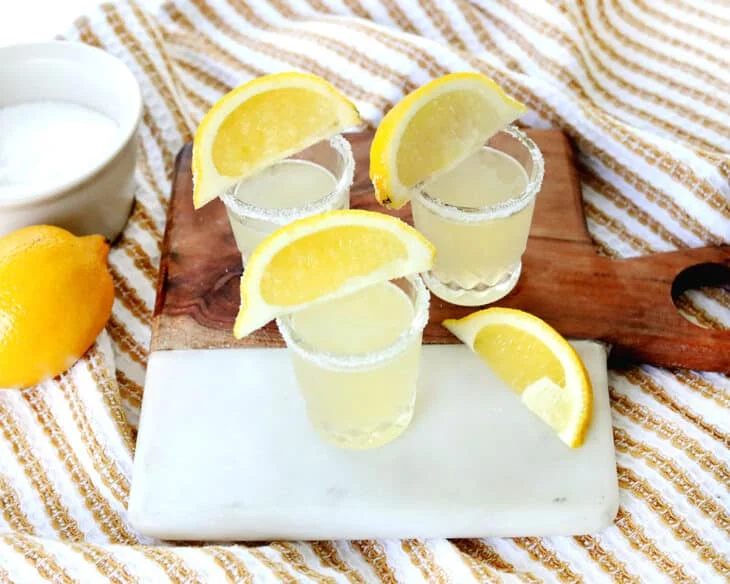
Run a cut lemon wedge around the rim of each shot glass, then dip the rim into a shallow plate of granulated sugar. The sugar adheres to the wet surface and gives you a sweet hit before the tart liquid arrives — it sequences the flavors rather than delivering everything simultaneously. Some bartenders mix a small pinch of kosher salt into the sugar. This does not make the rim taste salty; it amplifies the lemon flavor through the same mechanism that salt uses in a margarita rim. Try it once and you will understand immediately.
Three Mistakes That Ruin Lemon Drop Shots
Most bad lemon drops at home trace directly to one of these:
- Bottled lemon juice. Already covered above, but worth repeating because it is the most common and most impactful mistake by a significant margin. Fresh juice is the difference between a shot people request again and one they politely finish.
- Under-shaking. Twelve seconds minimum, shaken hard. The shaker should feel uncomfortably cold on the outside when you stop. Anything less produces a warm, improperly combined drink with a rough alcohol edge that should not be there.
- Clashing flavored vodka. Raspberry, vanilla, whipped cream, and other novelty-flavored vodkas fight the lemon rather than supporting it. If you want flavored vodka in this recipe, use only citrus-forward options.
Correct all three and your lemon drops will be better than the large majority of what gets served at home gatherings.
Lemon Drop Shot Variations Worth Making
Want it sharper and less candy-forward?
Reduce simple syrup to 0.25 oz and increase lemon juice to 1.25 oz. This shifts the profile from dessert-adjacent to genuinely tart — it reads more like a citrus sour than a sweet shot. If you take this direction, use Cointreau rather than cheap triple sec, because you need its inherent sweetness to hold the balance once you have pulled back on the added syrup. This version works particularly well for guests who normally find lemon drops too sugary or who prefer their cocktails dry.
Want stronger lemon character?
Replace plain vodka with Absolut Citron ($22) or Grey Goose Le Citron ($45). Absolut Citron is the more candy-bright choice — the lemon flavor is immediate and unmistakable, which is exactly what the classic lemon drop shot is supposed to taste like. Grey Goose Le Citron is more refined: less synthetic lemon, more natural zest, notably cleaner finish. For a party of 15 where guests are drinking quickly and not analyzing each sip, Absolut Citron is the better value. For a small dinner where someone will actually notice the quality of what you poured, Grey Goose Le Citron earns its premium. At shot quantities, though, most guests cannot reliably tell the two apart.
Non-alcoholic option?
Use Ritual Zero Proof Vodka Alternative ($30) as the base and Lyre’s Orange Sec ($35) in place of the triple sec. Neither is a perfect replacement for the real thing — Ritual’s texture is softer than ethanol-based vodka and Lyre’s orange liqueur carries a slightly different aromatic profile — but the combination holds the citrus framework of the shot well enough to serve at inclusive gatherings. Keep the fresh lemon juice and simple syrup ratios identical. Do not attempt to substitute with flavored sparkling water or premixed lemonade; those are entirely different drinks and will not land the same way.
Scaling Up for a Party — Batch Quantities and Logistics
Making shots to order for eight or twelve people while trying to host is a reliable way to spend the entire evening behind a makeshift bar. Batch the base mix that morning, refrigerate it, and shake in groups of four to six shots as people want them. You stay in the party instead of running the bar.
| Party Size | Shots Per Person | Vodka | Triple Sec | Fresh Lemon Juice | Simple Syrup |
|---|---|---|---|---|---|
| 4 people | 2 | 8 oz | 3 oz | 4 oz | 2 oz |
| 8 people | 2 | 16 oz | 6 oz | 8 oz | 4 oz |
| 12 people | 2 | 24 oz | 9 oz | 12 oz | 6 oz |
| 20 people | 2 | 40 oz (~1.25L) | 15 oz | 20 oz | 10 oz |
Store the batch without ice under any circumstances. Pre-diluting a batch by adding ice or water to the pitcher makes it watery within 30 minutes, and that dilution cannot be reversed. The mix keeps refrigerated for up to 48 hours, but fresh lemon juice begins degrading visibly after about 24, so same-day preparation is the better call when you can manage it. If you must prep the day before, squeeze the lemons separately and add the juice right before serving.
To serve from a batch, pour roughly 3.5 oz of mix per serving into your shaker, fill with ice, shake hard for 12 seconds, and strain into two or three shot glasses simultaneously. This is faster than individual orders, consistent across every round, and requires almost no attention once the system is running. For 20 people at two shots each, budget approximately $65 to $80 for alcohol using mid-range brands — about one full 750ml bottle of vodka and two bottles of triple sec or one bottle of Cointreau.
Choosing the Right Vodka: A Brand-by-Brand Comparison
The vodka you choose affects the finished shot more than most people anticipate. Lemon juice and sugar amplify rather than mask the base spirit’s character — a rough vodka stays rough even behind citrus, and a clean neutral vodka lets the other ingredients carry the flavor.
| Vodka | Price (750ml) | Flavor Profile | Best Use Case |
|---|---|---|---|
| Tito’s Handmade Vodka | ~$25 | Clean, slightly sweet, neutral finish | Everyday batches, reliable crowd choice |
| Absolut Citron | ~$22 | Bright lemon, candy-forward, slightly sweet | Classic lemon drop flavor, parties |
| Grey Goose Le Citron | ~$45 | Refined lemon zest, very clean finish | Small batches where quality is noticed |
| Ketel One | ~$28 | Crisp, slightly dry, mild grain character | Guests who prefer less sweetness |
| Svedka | ~$14 | Neutral with noticeable burn | Very large parties only |
For most home situations, Tito’s Handmade Vodka is the right call. It is clean enough to let the lemon and orange flavors lead the shot, priced reasonably for making 20-plus shots without feeling reckless, and available at virtually every liquor store. Absolut Citron is the better choice if you want that bright, forward lemon flavor — it is the historically traditional vodka for lemon drops, and at $22 it is actually cheaper than Tito’s in most markets.
Do not spend $45 on Grey Goose Le Citron for a batch of 16 shots. The subtlety you are paying for gets masked by a full ounce of fresh lemon juice and orange liqueur — that is not the context where Grey Goose earns its price. If you want to spend extra on one ingredient, put that money toward Cointreau instead of premium vodka. That upgrade will register clearly in the final taste.
Avoid anything priced under $12 per 750ml for this recipe. At shot quantities, the rough edges of cheap vodka are not neutralized by the citrus — they come through as an uncomfortable burn after the swallow that lingers in a way that the lemon flavor does not fix.