Butterbeer Recipe

You’ve tried those ‘easy’ Butterbeer recipes online. They’re bland, too sweet, or just… flat. You spent time, money, and now you’re left with a sugary disappointment. It’s not magic, it’s bad chemistry. Most recipes miss the point entirely, focusing on shortcuts that ruin the experience. Let’s fix this. You want real Butterbeer. Not some watered-down imitation.
The Core Components You’re Ignoring
Listen, Butterbeer isn’t just cream soda with whipped cream. That’s a rookie mistake. The real magic happens with a few key elements, and if you skimp on any of them, you’re just making a sugary mess. We’re aiming for something rich, complex, and genuinely reminiscent of the Universal Studios experience. You need balance: sweet, yes, but also a hint of something deeper, something almost savory. Most recipes dump sugar in and call it a day. That’s why your homemade stuff tastes like a bad carnival drink.
Quality Cream Soda Matters
This isn’t negotiable. Generic cream soda is thin, overly sweet, and lacks the necessary backbone. You need a premium brand. Think A&W, Sprecher, or something similar with real cane sugar. Cheap brands use high-fructose corn syrup, and you can taste it. It’s a flat, one-note sweetness that won’t stand up to the other flavors. Don’t ruin your Butterbeer before it even starts by grabbing the cheapest stuff on the shelf. This is the foundation; build it right.
The Butterscotch Element: Syrup vs. Sauce
Here’s where many people get lost. Some recipes call for butterscotch syrup, others for butterscotch sauce. There’s a difference. Syrup is thinner, designed to mix easily, often found near coffee supplies. Sauce is thicker, richer, meant for ice cream toppings. For the base, you want a good quality butterscotch syrup, something that dissolves smoothly and integrates without being cloying. Don’t grab the cheapest stuff. Brands like Torani or Monin offer decent options. For the foam? That’s a different story; we’ll get to that.
Real Butter, Not Margarine
This should be obvious, but I’ve seen some atrocious ingredient lists. You’re making Butterbeer. That means actual butter. Unsalted, always. High-quality butter provides that creamy, slightly salty, rich undertone that cheap fats just can’t replicate. It adds depth and mouthfeel that’s essential for a truly authentic taste. Don’t substitute here. Ever.
Cream Soda: Don’t Cheap Out Here
This is my firm stance: Your Butterbeer is only as good as your cream soda. Period. If you pick up some bargain-bin, high-fructose corn syrup-laden swill, your final product will reflect that. You’re building a flavor profile here, not just pouring sugar water. A good cream soda has a vanilla depth, a slight richness, and effervescence that holds up. Anything less? You’ve already failed before you even started mixing.
The A&W vs. Sprecher Debate
Let’s settle this. For most people, **A&W Cream Soda** is widely accessible and provides a solid, nostalgic flavor. It’s sweet, but has that signature vanilla note. If you can find it, **Sprecher Cream Soda** is superior. It uses honey and real vanilla, giving it a much richer, more complex flavor profile that elevates your Butterbeer significantly. It’s worth the hunt. Forget other obscure craft sodas; they often introduce weird, unwanted notes. Stick to these two, with Sprecher being the clear winner if available.
Avoiding Flatness
Beyond taste, carbonation matters. Don’t use flat cream soda. Don’t let it sit open. Pour it carefully, cold, and integrate your butterscotch mixture gently. You want those bubbles to last. A flat Butterbeer is just sweet liquid. The fizz is crucial for that authentic, light-but-rich experience. Keep your ingredients chilled, and work efficiently.
Butterscotch vs. Caramel: The Real Difference
People confuse these all the time. They are not interchangeable. Butterbeer is specific. It’s butterscotch, not caramel. Get that straight. You use caramel, and you’re making something else entirely. Something probably still delicious, but not Butterbeer.
| Feature | Butterscotch | Caramel |
|---|---|---|
| Primary Sugar | Brown Sugar | Granulated Sugar |
| Flavor Profile | Rich, buttery, slight molasses, distinct burnt sugar notes from brown sugar | Sweet, often nutty, smoother, less pronounced butteriness, more pure sugar notes |
| Color | Often darker, deeper brown | Varies from light golden to deep amber |
| Base Fat | Butter | Often butter, but less essential to the core flavor than in butterscotch |
| Texture | Can be slightly grainier or more robust due to brown sugar | Typically very smooth and glossy |
Why Brown Sugar Dominates Butterscotch
Butterscotch gets its distinct flavor from brown sugar, which contains molasses. This molasses provides a deeper, more complex taste than the pure sucrose of granulated sugar used in caramel. That underlying richness is what you need for Butterbeer. Caramel, while delicious, is too clean, too one-note for this application. It lacks the subtle earthiness and robust butteriness that defines a proper butterscotch flavor.
The Flavor Impact on Butterbeer
Using caramel will make your Butterbeer taste like a caramel soda with cream. It’s a fundamental shift in flavor. Butterscotch provides that specific, almost slightly salty, deeply buttery, and nuanced sweetness that cuts through the cream soda and ties everything together. Don’t compromise. If a recipe tells you to use caramel, throw it out. It’s giving you bad advice.
Common Butterbeer Blunders
You’re making mistakes. Everyone does the first few times. Here’s what usually goes wrong and how to fix it before you waste another batch of ingredients. Pay attention.
1. Not Chilling Ingredients Properly
This is basic. You need your cream soda and any pre-mixed butterscotch base to be ice cold. If they’re warm, your drink will be lukewarm and the carbonation will dissipate faster. A warm drink hits different, and not in a good way. Plan ahead. Chill everything for at least 4 hours, preferably overnight. This isn’t optional; it’s fundamental.
2. Over-Sweetening the Base
Most online recipes tell you to add way too much butterscotch to the cream soda. The goal isn’t a sugar rush. It’s a balanced drink. Start with a conservative amount of butterscotch syrup, taste, then add more if absolutely necessary. Remember, the cream foam is also sweet. You want a drink that’s enjoyable, not one that makes your teeth ache. A good starting point is usually 1-2 tablespoons per 12 oz (355ml) of cream soda, depending on your syrup’s intensity.
3. Ignoring the Cream Foam
This isn’t just decoration. The cream foam is essential for texture and flavor. A properly made foam adds a velvety richness and a contrasting sweetness that completes the drink. Just squirting some canned whipped cream on top? That’s lazy and tastes like it. You need real heavy cream, sugar, and flavorings for the foam. It’s half the experience.
4. Using Cheap Vanilla Extract
Vanilla is critical, especially in the foam. Don’t grab the artificial stuff. Real vanilla extract makes a noticeable difference. It adds a warmth and depth that artificial vanilla can’t touch. If you’re going to bother making this, use decent ingredients. It’s the small details that elevate the whole thing.
5. Not Making Enough
Seriously, make a double batch. You’ll thank me later. These go fast. Once you get it right, everyone will want some. Don’t be caught short. There’s nothing worse than perfecting a recipe only to run out halfway through serving.
Your Butterbeer Cream Topping Problem, Solved
This is where most attempts fall apart. The foam isn’t just whipped cream. It’s a specifically flavored, stable, rich cream that sits atop the drink, slowly dissolving into it. Get this wrong, and your Butterbeer is incomplete. This isn’t a garnish; it’s an integral layer. So let’s make it correctly.
Ingredients for the Perfect Foam
- 1 cup (240ml) heavy cream (minimum 36% fat content)
- 1/4 cup (50g) granulated sugar
- 1/2 teaspoon real vanilla extract
- 2 tablespoons good quality butterscotch sauce (thicker than syrup, meant for toppings)
- Pinch of salt (don’t skip this, it balances the sweetness)
Step-by-Step Foam Perfection
1. **Chill your bowl and whisk:** This is crucial. A cold bowl and whisk (or stand mixer attachment) will help the cream whip faster and achieve better volume. Stick them in the freezer for 10-15 minutes before you start. This simple step makes a huge difference in consistency and stability.
2. **Combine ingredients:** Pour the cold heavy cream into your chilled bowl. Add the granulated sugar, vanilla extract, butterscotch sauce, and that crucial pinch of salt. Don’t just dump them in; ensure everything is ready to go.
3. **Whip to medium-soft peaks:** Using an electric mixer (handheld or stand mixer), start on low speed to prevent splattering, then gradually increase to medium-high. Whip until the cream forms medium-soft peaks. What does that mean? When you lift the whisk, the peaks should hold their shape but still be slightly floppy, not stiff. Over-whipping will result in a grainy, overly stiff foam that won’t melt into the drink properly. This takes about 3-5 minutes depending on your mixer. Stop before it’s too firm. Taste it. Adjust if needed, but it should be sweet, creamy, and distinctly butterscotch. That tiny pinch of salt cuts the sweetness and enhances the butterscotch flavor. Trust me on this.
Hot, Cold, or Frozen? Pick Your Poison
Look, the original, iconic Butterbeer from the books and the parks is served cold. Period. Some places offer hot versions, and you can make a frozen one, but if you want *the* Butterbeer experience, it’s cold. That’s the verdict.
The Definitive Butterbeer Recipe
This is it. Follow these steps exactly. Don’t improvise. You want the real deal? This is how you get it. Forget the half-baked recipes you’ve tried before. This yields one perfect, 12 oz (355ml) serving. Scale up as needed.
Ingredients for One Perfect Serving
- 10 oz (295ml) ice-cold premium cream soda (A&W or Sprecher)
- 2 tablespoons high-quality butterscotch syrup (Torani or Monin recommended)
- Plenty of ice (for the cold version)
For the Cream Foam (makes enough for 4-6 servings, can be stored in fridge for up to 2 days)
- 1 cup (240ml) heavy cream (minimum 36% fat)
- 1/4 cup (50g) granulated sugar
- 1/2 teaspoon real vanilla extract
- 2 tablespoons good quality butterscotch sauce (e.g., Smucker’s or Hershey’s shell topping, without the shell part, or any thick ice cream topping)
- Pinch of salt
Step-by-Step Assembly
1. **Prepare your foam first:** Seriously, do this ahead of time. Follow the detailed instructions in the previous section: chill your bowl and whisk, combine all foam ingredients (heavy cream, sugar, vanilla, butterscotch sauce, salt), and whip to medium-soft peaks. Keep it chilled in the fridge until ready to serve. This foam can be made a few hours in advance; give it a gentle whisk just before serving if it’s settled.
2. **Mix the base:** In a tall, chilled glass (preferably a pint glass or mug, like the ones at Universal), add 2 tablespoons of butterscotch syrup. You don’t need more. Pour the 10 oz of ice-cold cream soda gently over the syrup. Don’t stir aggressively; you want to preserve the carbonation. A gentle swirl with a spoon is fine to ensure the syrup is mixed.
3. **Add ice (for cold Butterbeer):** For the authentic cold experience, fill your glass with ice. Not just a few cubes; fill it up. This keeps it perfectly chilled and helps maintain the fizz. If you prefer hot, omit ice and gently warm the cream soda (don’t boil!) before mixing with syrup.
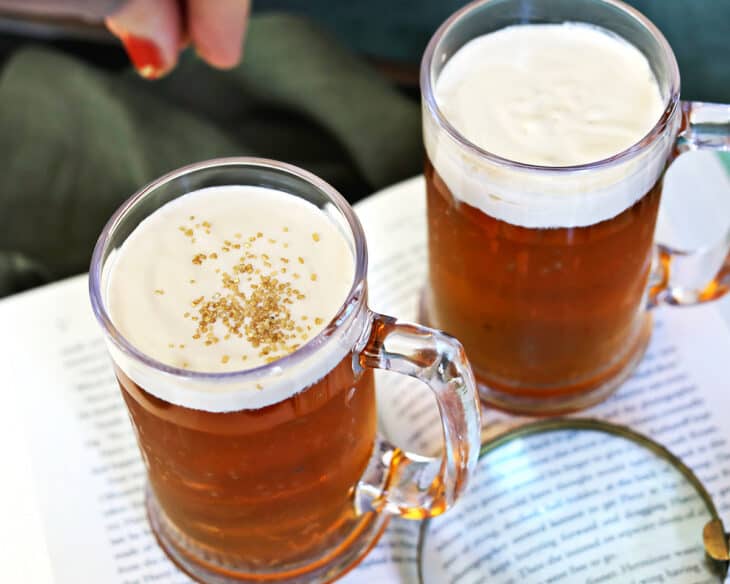
4. **Top with foam:** The final, crucial step. Spoon a generous amount of your prepared butterscotch cream foam on top of the cream soda base. Don’t be shy here; you want a thick, creamy layer that cascades down into the drink as you sip. This is the whole point. Aim for about 2-3 inches of foam. The foam should be thick enough to sit on top without immediately sinking.
5. **Serve immediately:** Don’t let it sit. The best Butterbeer is served fresh, with the foam intact and the carbonation lively. Hand it over. Watch the magic happen. Your taste buds will thank you.
Follow these steps. Your Butterbeer will be better than anything you’ve had outside Diagon Alley. Seriously. No more weak imitations. This is the real deal.