Vanilla Syrup

Most vanilla syrups taste fine. A handful taste genuinely good. The difference comes down to three things: where the vanilla flavoring comes from, how much sugar is in it, and whether the base is real extract or synthetic vanillin.
This guide cuts through the noise. You’ll know exactly what to look for on the label, which brands to trust for different uses, and which ones aren’t worth the shelf space.
What Actually Makes a Vanilla Syrup Good
Vanilla syrup is simple in concept: water, sugar, and vanilla flavoring. But the version your local café uses and the dollar-store bottle look identical from across a room. Taste them side by side and the gap is obvious. Most of the difference between a $2 grocery store bottle and a $12 café-grade syrup comes down to three variables — vanilla source, sugar quality, and production consistency. Understanding them means you stop paying for branding and start paying for flavor.
The Vanilla Source Is the Biggest Factor
Real vanilla flavor comes from Vanilla planifolia, a tropical orchid grown primarily in Madagascar, Tahiti, and Indonesia. Each origin tastes different.
Madagascar vanilla — also called Bourbon vanilla — is the most common and most recognized. Creamy, warm, and rich. The classic ‘ice cream vanilla’ note most people picture. Tahitian vanilla is more floral and fruity, less straightforwardly sweet. Indonesian vanilla is earthier with a faint smokiness.
Higher-end syrups will specify the origin. Budget brands won’t. That’s already a useful signal before you read the full ingredient list.
The more important distinction is natural vanilla extract vs. synthetic vanillin. Vanillin is the primary flavor compound in real vanilla — but it can also be produced cheaply from wood pulp or from guaiacol, a coal tar derivative. Synthetic vanillin isn’t inherently bad; it appears in most grocery store baking products. But real vanilla contains over 200 flavor compounds alongside vanillin. Synthetic versions reproduce only one. The result is a flat, one-dimensional sweetness that experienced tasters identify within a few seconds.
Sugar Type and Concentration Affect Both Flavor and Use
Standard simple syrup is 1:1 sugar to water by weight. Most commercial vanilla syrups use this ratio. Rich syrups go 2:1 — more sweetness per milliliter, useful when you want flavor without adding liquid volume.
Cane sugar syrups taste cleaner than those made with high-fructose corn syrup, which adds a faint chemical-sweet note. The ingredient list tells you everything: it should lead with water, cane sugar, and some form of vanilla. Corn syrup appearing before vanilla is a red flag.
Some brands now use coconut sugar, monk fruit, or erythritol for health-conscious buyers. These work but change the flavor profile. Coconut sugar adds a mild caramel-molasses undertone. Monk fruit and erythritol are calorie-free but can leave a faint cooling aftertaste, especially noticeable in hot drinks.
Viscosity and Mixability Matter More Than You’d Think
Good vanilla syrup pours evenly, dissolves quickly in cold liquid, and doesn’t leave a syrupy film clinging to the glass. High-concentration syrups integrate perfectly in hot espresso but can settle or separate in iced drinks without thorough stirring.
Pump bottles dispense consistent 5–7ml per pump — that matters if you want the same flavor profile every morning. Pour-top bottles are cheaper and fine for occasional home use, but you’ll eyeball every pour.
The bottle format also reflects who the product is designed for. Pump-top syrups like Monin and Torani are built for cafés and heavy daily use. Pour bottles like Stonewall Kitchen are designed for kitchen use and occasional drizzling — not rapid-fire drink production.
Top Vanilla Syrup Brands Compared
A quick note before the table: prices reflect single-bottle retail in the US as of 2026. Size matters here — Stonewall Kitchen’s 8oz bottle looks affordable until you compare it to Monin’s 750ml, which gives roughly three times as much syrup for a slightly higher price.
| Brand | Price (approx.) | Size | Vanilla Source | Sugar Base | Best Use |
|---|---|---|---|---|---|
| Monin Vanilla | $11–13 | 750ml | Natural vanilla flavor | Cane sugar | Coffee, lattes, cocktails |
| Torani Vanilla | $8–10 | 750ml | Natural vanilla flavor | Cane sugar | Everyday coffee drinks |
| 1883 Maison Routin Vanilla | $15–18 | 1L | Bourbon vanilla extract | Cane sugar | Specialty coffee, cocktails |
| DaVinci Gourmet Vanilla | $9–11 | 750ml | Natural vanilla flavor | Cane sugar | Coffee, flavored lattes |
| Stonewall Kitchen Vanilla Bean | $12–15 | 240ml (8oz) | Vanilla bean specks | Cane sugar | Baking, breakfast, gifting |
| Jordan’s Skinny Syrups Vanilla | $8–10 | 750ml | Natural + artificial flavor | Monk fruit/erythritol | Low-calorie coffee drinks |
Monin Vanilla is the right call for most people. It’s what cafés actually use, the cane sugar base is clean, and at $11–13 for 750ml it lasts weeks with daily use. Flavor is well-rounded without being cloying.
1883 Maison Routin is the step-up choice. The French brand specifies Bourbon vanilla extract — not just ‘natural vanilla flavor’ — and you can taste it. There’s a depth here that Monin and Torani can’t match. At $15–18 for 1L, it’s competitive on a per-ounce basis and worth it if you’re serious about drink quality.
Torani is the solid everyday option if you go through syrup fast and don’t want to spend $12 every two weeks. Flavor is slightly thinner than Monin but perfectly acceptable in a latte or cold brew. DaVinci Gourmet falls in the same tier — comparable flavor, comparable price, worth grabbing when Torani isn’t available. One other brand worth seeking out: Amoretti Premium Vanilla Syrup ($14–16 for 750ml), used in competition-level barista work, with noticeably more nuance than the mainstream options.
Jordan’s Skinny Syrups works if you’re watching calories. The monk fruit base delivers sweetness without sugar, but the faint cooling aftertaste bothers some people in hot drinks. Better cold.
Homemade vs. Store-Bought: A Straight Answer
Homemade vanilla syrup is better than any store-bought version. Equal parts water and sugar, simmered until dissolved, steeped for 30 minutes with a split vanilla bean, then strained — the result costs about $2–3 per batch and takes 10 minutes of active time. The flavor is deeper and the sweetness more natural than anything in a commercial bottle.
The only real argument for store-bought: shelf life. Homemade syrup without preservatives lasts about two weeks refrigerated. Opened bottles of Monin or Torani last up to four weeks. If you make one drink a day, homemade makes sense. If you reach for vanilla syrup occasionally, a commercial bottle is more practical and less wasteful.
Five Mistakes People Make When Buying Vanilla Syrup
Confusing vanilla syrup with vanilla extract. These are not interchangeable. Vanilla extract is alcohol-based and highly concentrated — measured in teaspoons for baked goods. Vanilla syrup is water-and-sugar-based, measured in tablespoons or pumps for drinks. Using vanilla extract in your morning coffee tastes boozy and bitter. Using vanilla syrup as a 1:1 extract substitute in a cookie recipe adds too much liquid and too little flavor.
Buying ‘vanilla-flavored’ syrup by accident. Some cheaper bottles are mostly caramel coloring and synthetic vanillin. Flat flavor that fades fast in hot drinks. The giveaway: if ‘artificial flavor’ appears before ‘natural flavor’ in the ingredient list, the vanilla character will be thin and chemical-sweet. Put it back.
Ignoring the sugar concentration. A 2:1 rich syrup contains twice the sweetness per milliliter compared to a standard 1:1 syrup. Switch brands without adjusting your pour and your drink will taste noticeably different. Most brands don’t advertise the ratio on the front label — look for ‘rich syrup’ on the label or check the sugar content per serving on the nutrition panel.
Storing it incorrectly. An opened bottle left on the counter will develop mold within a week. Refrigerate after opening. Always. Some syrups include preservatives that slow degradation, but cold storage is still necessary once the seal is broken. A sticky residue around the pump or cap is a sign the bottle has been sitting too long at room temperature.
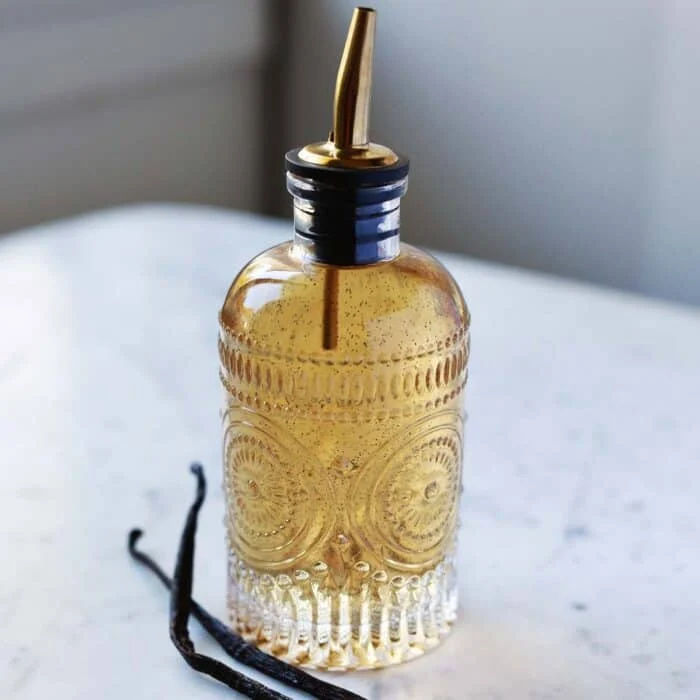
Overpaying for ‘vanilla bean’ labeling without verifying what it means. Many brands add ‘vanilla bean’ to the product name while using the same synthetic vanillin as their cheaper version. Real vanilla bean syrups have visible dark specks in the bottle and list ‘vanilla bean extract’ or ‘vanilla bean seeds’ as a specific ingredient. Stonewall Kitchen’s Vanilla Bean Syrup ($12–15 for 8oz) is a legitimate example — visible specks, noticeably richer flavor. Most others using the name are bluffing.
Where Vanilla Syrup Earns Its Place at Home
Vanilla syrup is one of the most versatile sweeteners you can keep in your kitchen. The question isn’t whether to have a bottle — it’s knowing where it works well and where something else does the job better.
Most home kitchens already have vanilla extract for baking. Adding vanilla syrup seems redundant until you try to sweeten a cold brew or make a quick mocktail — extract doesn’t dissolve in cold liquid, and it tastes sharp in drinks. Syrup solves both problems. It’s the form of vanilla that works outside the oven.
In Your Morning Coffee, It Beats Sugar
One pump (about 5–7ml) of Monin vanilla in a double espresso over ice adds sweetness and aroma without overpowering the coffee. It outperforms granulated sugar in iced drinks because it dissolves completely at any temperature. It’s cleaner than flavored creamer and more controlled than a heavy pour of simple syrup.
For hot drinks, add the syrup before the milk so it integrates fully. For iced drinks, stir it into the espresso while still warm — it dissolves faster before the ice goes in. Two pumps for a 12oz drink, three for 16oz. Start there and adjust to taste.
In Baking, Use It for Moisture — Not Flavor
Vanilla syrup is not a substitute for vanilla extract in baking. For cookies, cakes, and custards, you need a proper extract — Nielsen-Massey Madagascar Bourbon Pure Vanilla Extract ($15 for 4oz) is the benchmark for home bakers who care about flavor depth.
Where syrup earns its place: brushed onto warm cake layers before frosting (adds sweetness and keeps the crumb moist), folded into whipped cream (dissolves smoothly while adding flavor), or drizzled over French toast and waffles where the extra liquid and sweetness both serve the dish.
Beyond the obvious applications, there are underrated uses. A tablespoon stirred into plain oatmeal with a pinch of salt is considerably better than flavored packet versions. Mixed into plain Greek yogurt with fresh fruit, it adds sweetness without the artificial note of pre-flavored vanilla yogurt.
In Cocktails and Mocktails, Pick the Richer Syrup
Vanilla syrup works well in an Old Fashioned as a substitute for plain simple syrup — it adds warmth that complements bourbon and rye whiskey. In mocktails, it pairs best with citrus: a vanilla lemonade made with 2oz of vanilla syrup, 4oz of fresh lemon juice, and sparkling water is a crowd-pleaser that takes three minutes to make.
For cocktails specifically, 1883 Maison Routin is the better call. Its richer Bourbon vanilla base stands up to spirits without disappearing. Torani, excellent in coffee, can taste faint in mixed drinks where it competes with bitters, citrus, or dark spirits.
The best vanilla syrup you can buy is the freshest one you’ll actually finish.