Sculpt Small Air-Dry Clay Plaques with Fabric Imprints

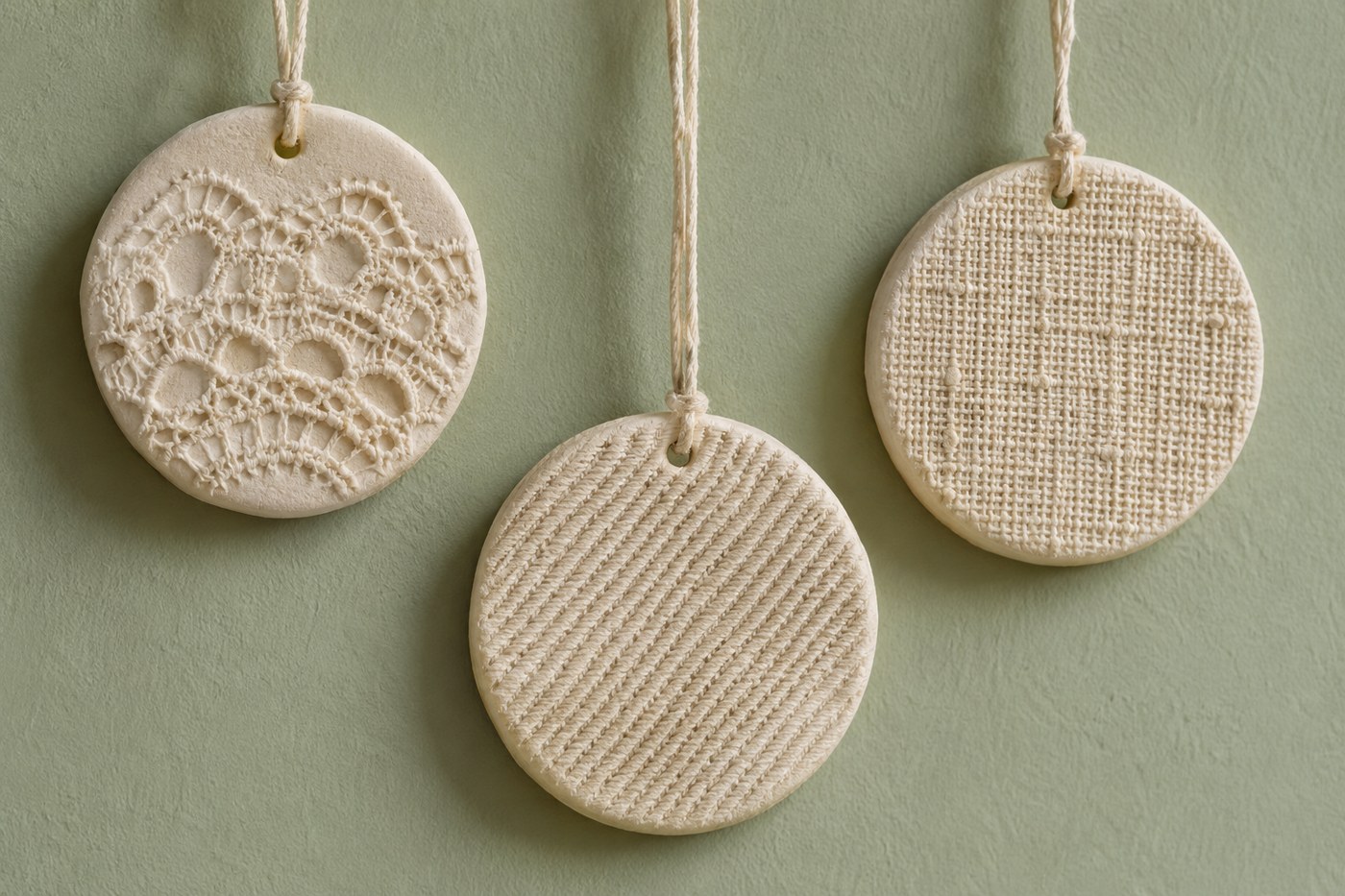
A piece of lace or coarse linen leaves a pattern in damp clay that looks quite different from the fabric itself. Make three small plaques for an indoor spring display, each with a different texture. They are decorative pieces, not dishes or outdoor plant markers.
Materials for three plaques
- About 150 g of commercially prepared air-dry craft clay
- Three clean fabric scraps at least 7 cm across, such as lace, denim and coarse linen
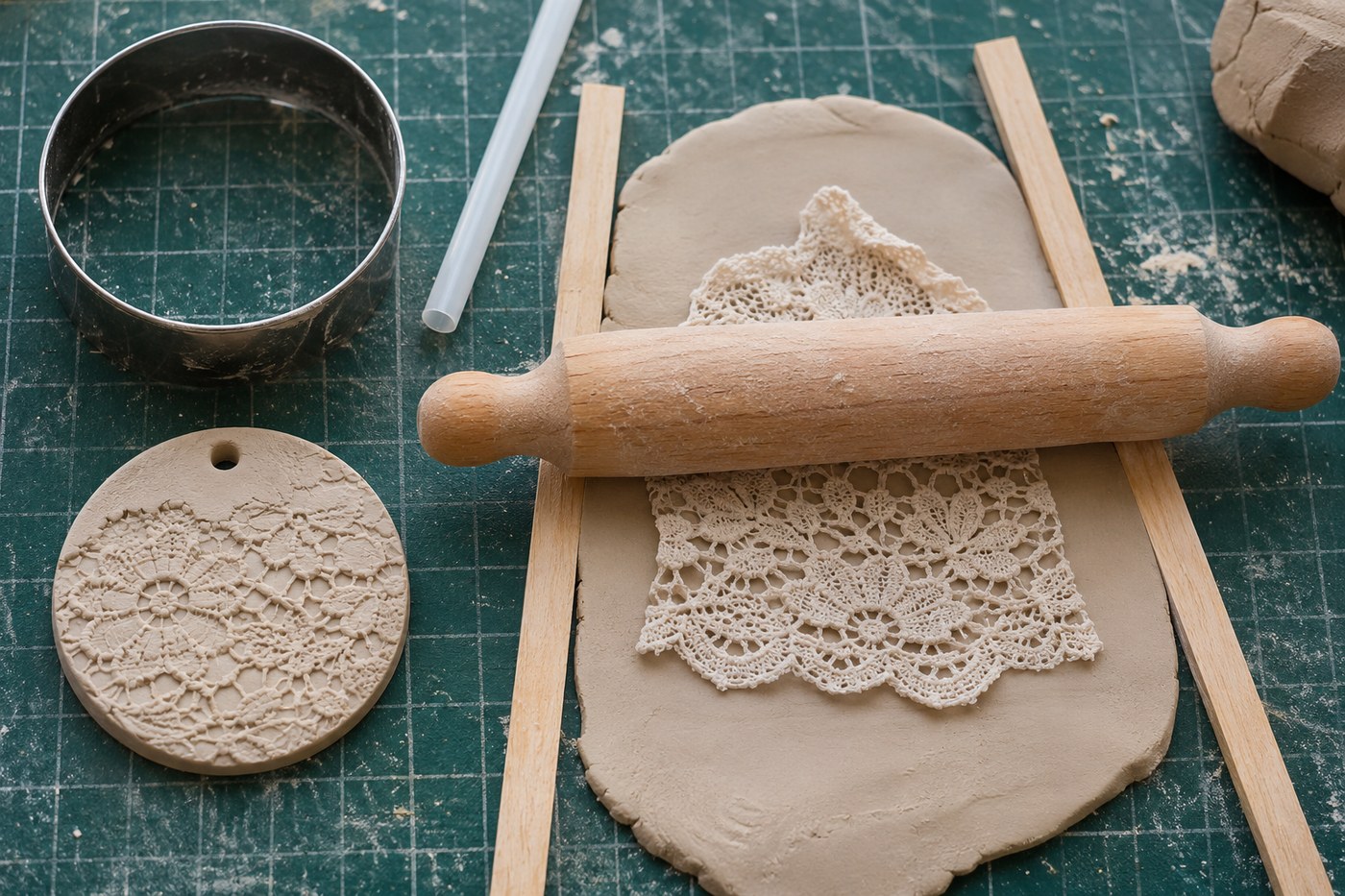
- Rolling pin reserved for crafts, two 6 mm guide strips, a 6 cm round craft cutter and a drinking straw
- Nonstick craft mat, drying board and three 20 cm lengths of thin cotton cord
Roll, print and punch
- Knead the clay just until pliable. Roll it between the guide strips on the mat so it is about 6 mm thick. If the slab is too small for three circles side by side, work in two batches and keep unused clay wrapped.
- Lay fabric on the clay and press it with a single gentle pass of the rolling pin. Lift from one corner. Cut a circle around the best part of the impression and lift the scrap clay away rather than bending the circle to release it.
- Twist the straw through the plaque to form a hole with its center about 1 cm from the rim. Clear the plug from the straw between holes. Smooth rough spots with a barely damp fingertip, keeping water away from the printed area.
Dry slowly, then hang
Follow the clay package’s drying directions, turning the plaques when they are firm enough to move and the instructions allow it. Do not force-dry them on a radiator. Thread and knot the cord only after the clay is fully dry. Hang indoors where the plaques will not knock against one another.
If a fabric pulls up the clay, peel at a lower angle or choose a tighter weave that does not grab the surface. If the first imprint is faint, press slightly more firmly on the next one rather than trying to line the same cloth up twice. An uneven slab can curl as it dries, so check the thickness before cutting.