How to Make Traditional Handmade Bagels with Perfect Chewy Texture

What Makes the Perfect Chewy Bagel: Key Factors for Authentic Chew
Creating traditional handmade bagels with perfect chew starts with understanding a few crucial elements. First, high-protein bread flour is essential because it develops strong gluten. This strong gluten network gives bagels their signature dense yet elastic texture, unlike softer flours such as all-purpose.
Next, the boiling step is what truly sets authentic chewy bagels apart. Boiling the shaped dough gelatinizes the crust, sealing moisture inside and creating that dense, chewy bite New York style bagels are famous for. Skipping or shortening this step leads to soft, bread-like bagels without the characteristic chew.
Another key ingredient is malt—usually barley malt syrup—which adds a subtle sweetness, enhances the crust color, and creates a shiny finish. If you don’t have barley malt syrup, alternatives like honey or malt powder work in a pinch but might alter flavor slightly.
Finally, the kneading, fermentation, and shaping methods contribute significantly to bagel structure. Proper kneading strengthens gluten; slow fermentation (often overnight) deepens flavor; and hand-shaping techniques like the rope-and-loop or poke method ensure an even, dense crumb.
Together, these factors are the foundation for baking authentic chewy bagels that deliver that classic dense chew and shiny crust every time.
Ingredients You’ll Need for Traditional Handmade Bagels with Perfect Chew
To make authentic chewy bagels, you’ll need the right ingredients in precise amounts. Here’s a simple list for about 8 bagels:
- High-protein bread flour – 500g (4 cups)
- Active dry yeast – 7g (1 packet)
- Salt – 10g (1 ½ tsp)
- Warm water – 300ml (about 1 ¼ cups)
- Barley malt syrup or honey – 2 tbsp (for dough and boiling bath)
Why Use Bread Flour?
Bread flour has more protein than all-purpose flour, which develops stronger gluten. This gluten network is key for that dense, chewy texture that defines New York style bagels. Using all-purpose flour will give softer bagels, less authentic in texture.
Malt Syrup or Honey?
Barley malt syrup is traditional—it adds subtle sweetness, helps brown the crust, and gives bagels their signature shine. If you can’t find barley malt syrup, honey or even light corn syrup works as an alternative, though flavor and gloss might vary slightly. You can find barley malt syrup online or at specialty baking stores.
Other Notes and Substitutions
- Yeast: Instant yeast can replace active dry, just adjust hydration slightly.
- Water: Use filtered or bottled water if your tap water is heavily chlorinated to avoid dull flavors.
- Salt: Sea salt or kosher salt works fine; just measure by weight for accuracy.
Having these ingredients on hand will set you up for successful hand-shaped bagels with that perfect chewy bite. For making the boiling bath, using a quality malt syrup ensures the shiny bagel crust, a signature of boiled bagels technique.
If you want to experiment with sweet variations like cinnamon raisin bagels, you might also consider adding spices or dried fruits at the shaping stage.
By choosing high-gluten flour and malt syrup, you’re staying true to traditional bagel making methods and guaranteeing a dense chewy texture every time.
Step-by-Step Instructions for Traditional Handmade Bagels with Perfect Chew
Mixing and Kneading the Dough
Start by combining your high-protein bread flour, yeast, salt, water, and malt or honey in a large bowl. You can mix and knead by hand or use a stand mixer with a dough hook. Knead for about 8-10 minutes until the dough is smooth and elastic. The goal is to develop strong gluten strands that give bagels their signature chew. Avoid over-kneading, which can make the dough tough.
First Rise and Overnight Refrigeration
Let the dough rise at room temperature until doubled, roughly 1 to 1.5 hours. For deeper flavor and better texture, punch it down and refrigerate overnight. This slow fermentation enhances the dough’s complexity, making your New York style bagels taste authentic and rich.
Dividing and Shaping
Once your dough is ready, divide it into equal pieces — typically 3 to 4 ounces each. Shape each piece either by:
- Rope-and-loop method: Roll the dough into a rope, then join the ends to form a ring.
- Poke method: Roll a ball and poke a hole in the center, stretching gently to shape.
Both techniques work well, but hand-shaped ropes often create a more uniform crust.
Preparing the Boiling Bath
Boiling is essential for that shiny, chewy crust. Fill a large pot with water and bring it to a gentle boil. Add malt syrup or a malt substitute like honey to the boiling water — this helps develop a golden crust and subtle sweetness. Boil the bagels 1 at a time or in small batches for about 1 to 2 minutes per side. The longer you boil, the denser and chewier the bagel will be.
Topping Application
After boiling, transfer bagels to a baking sheet lined with parchment. While still wet, brush with an egg wash for a glossy finish. Sprinkle toppings like sesame seeds, poppy seeds, or everything bagel seasoning before baking. This step locks toppings onto the bagels while enhancing flavor.
Baking for Golden Crust
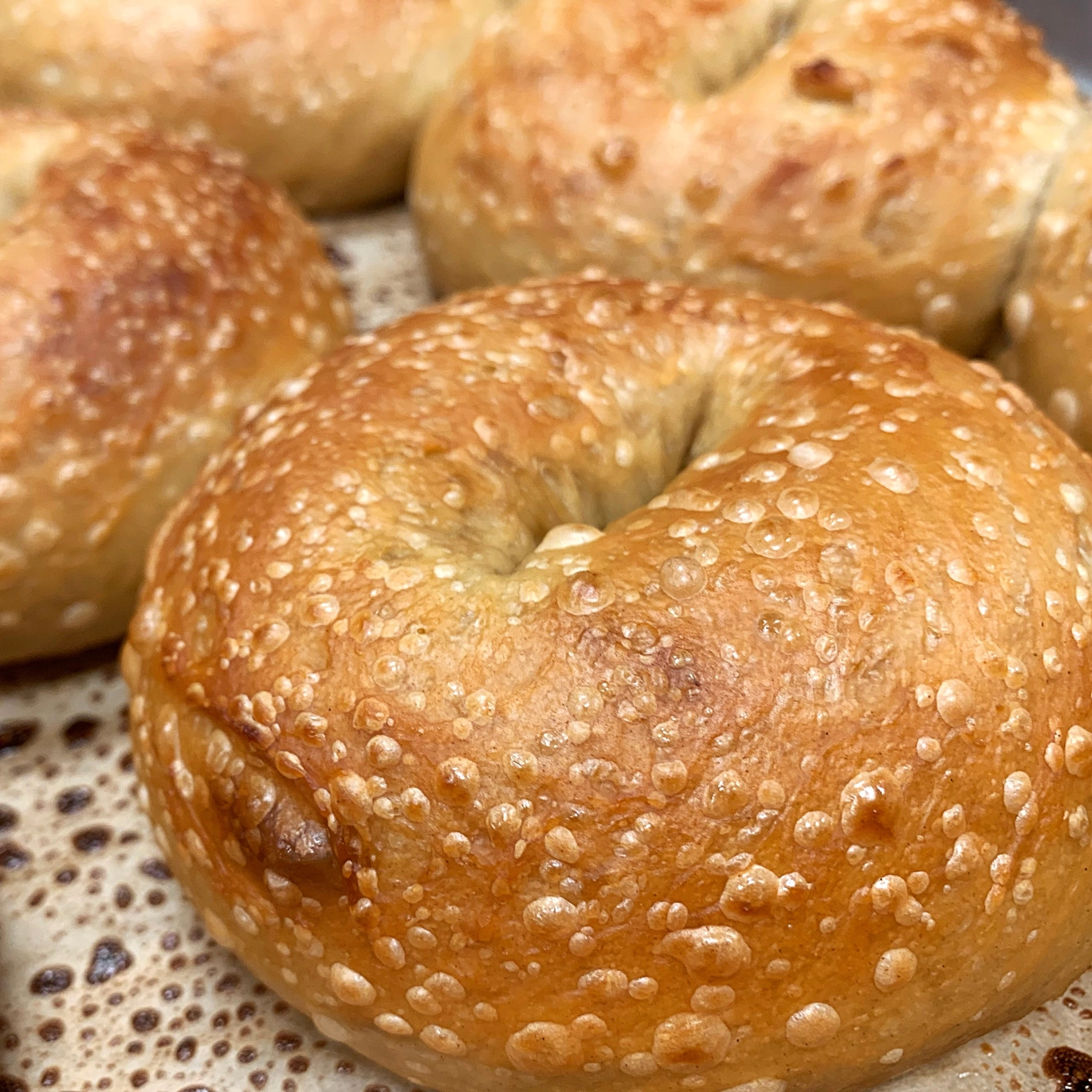
Bake your bagels in a preheated oven at 425°F (220°C) for 20-25 minutes until golden brown and shiny. Rotate the tray halfway through to ensure even baking. Proper oven positioning helps develop that perfect, crisp crust while keeping the inside chewy and dense.
Following these steps will give you authentic chewy bagels with that irresistible New York style bite. For additional ideas on flavoring and variations, you might enjoy experimenting with toppings and baking techniques described here, inspiring creative approaches to traditional recipes.
Tips for Success and Common Mistakes to Avoid
Getting the perfect chewy bagel starts with the right dough consistency—aim for a firm but slightly tacky feel. Too wet, and the bagels will spread out flat; too dry, and they’ll be dense and tough.
Boiling time plays a big role in chewiness. A longer boil (about 90 seconds per side) creates a denser, chewier crust, while a shorter boil gives a lighter texture. Don’t under-boil if you want that authentic New York style bagel bite.
Oven temperature should be around 425°F (220°C). Place bagels on the middle rack for even baking to get that golden, shiny crust. Using a baking stone or steel can help mimic a bread oven’s heat distribution.
Common hiccups include flat bagels—usually from overproofing or too-soft dough—lack of shine from skipping malt or improper egg wash, and insufficient chew from boiling too briefly or using all-purpose flour instead of high-gluten bread flour. Follow these steps closely to avoid these typical mistakes.
For a detailed look at shaping and handling dough, you might find useful tips in our homemade hushpuppies recipe which covers dough texture and frying techniques that can inspire your bagel practice.
Bagel Topping Ideas and Variations
When it comes to traditional handmade bagels with perfect chew, the toppings can really elevate the flavor without sacrificing that classic texture. Here are some popular topping ideas to try:
- Classic options: Everything bagel seasoning is a favorite for good reason—it combines sesame seeds, poppy seeds, dried onion, garlic, and coarse salt. You can also go simple with just sesame, poppy seeds, or kosher salt sprinkled on top before baking.
- Sweet variations: For a breakfast twist, try cinnamon raisin bagels by adding cinnamon sugar and raisins to the dough or as a topping before baking. These keep the chewy feel while introducing a subtle sweetness.
- Savory additions: Garlic or cheese toppings add a rich, flavorful punch. Minced garlic or garlic powder can be sprinkled on before baking. For cheese bagels, shredded cheddar or parmesan melts on top, giving a nice savory crust.
To customize without losing the traditional dense chewy texture, apply toppings lightly so the dough’s structure isn’t overwhelmed. The boiling and baking techniques remain the same regardless of toppings to lock in that signature shiny bagel crust and dense chew.
For some inspiration beyond bagels, you might also enjoy exploring savory breads like homemade garlic toast, which pairs wonderfully alongside bagels for a satisfying spread.
How to Serve and Store Homemade Bagels
The best way to enjoy your traditional handmade bagels with perfect chew is fresh and warm. Toast them lightly to bring out their dense chewy texture, then add your favorite toppings like classic cream cheese, smoked salmon (lox), or a dab of butter. You can also try savory spreads, or even sweet options like jam for a delicious breakfast or snack.
To keep your fresh baked bagels at their best, store them at room temperature in a paper bag inside a sealed container for up to two days. For longer storage, freeze your bagels wrapped tightly in plastic wrap or foil, then place them in a freezer-safe bag. When you’re ready to eat, thaw overnight or pop them straight into the toaster for that revived chewy bite and shiny bagel crust.
Reheating frozen bagels works wonders to restore that authentic chewy bagel texture. Try briefly baking them in a preheated oven at 350°F (175°C) for 5-7 minutes or using a toaster oven. Avoid microwaving as it can make them tough and rubbery, ruining that perfect chew you worked hard to achieve. For a quick, crispy exterior with soft inside, a toaster or oven method is your best bet.
By following these serving and storage tips, your homemade bagels will remain just as satisfying as the day they were baked, making each bite a true taste of traditional New York style bagels.
Frequently Asked Questions about Traditional Handmade Bagels with Perfect Chew
Can I use all-purpose flour?
All-purpose flour can be used, but it usually won’t give you that dense chewy texture that bread flour provides. High-protein bread flour or high-gluten flour is better for gluten development, which builds the bagel’s signature chew and structure. For authentic chewy bagels, stick to bread flour if you can.
What’s a good barley malt substitute?
If you don’t have barley malt syrup, honey or brown sugar can work as alternatives. Malt is important because it adds flavor depth and helps produce that shiny bagel crust during boiling and baking. Just keep the quantity the same when substituting.
Why boil bagels?
Boiling bagels before baking gelatinizes the crust and seals in moisture, which locks in the dense chew and prevents sogginess. This boiled bagel technique is essential to getting that classic New York style bagel texture and shiny crust.
How to make them vegan or gluten-free?
For vegan bagels, simply replace the egg wash with a plant-based alternative like aquafaba or non-dairy milk for shine and skip any animal-based toppings like cheese. Gluten-free bagels are trickier since gluten forms the chew; you’d need gluten-free bread flour blends designed for chewy bread and may need to adjust boiling and baking times to avoid breaking apart.
Overnight vs. same-day methods—what’s the difference?
Overnight fermentation in the fridge develops flavor, making the bagels taste richer and more complex. The dough also firms up, which can make shaping easier. Same-day bagels are quicker but may have less flavor depth and a lighter texture.
For more detailed steps on perfect dough handling and fermentation methods, check out our guide on traditional bagel making and how to get that fresh baked bagels flavor at home.