Garlic Toast

You pull a tray from under the broiler. The edges are black. The center is pale and faintly rubbery. It tastes mostly of bitter garlic. That outcome follows a specific and avoidable chain of decisions — and in most cases, one of four things went wrong.
The preparation is simpler than it looks once you understand the actual variables: heat source, butter temperature, bread thickness, and how garlic behaves differently depending on when and how you apply it. Get those four right and the rest follows.
The Difference Between Garlic Toast and Garlic Bread
The two preparations are treated as interchangeable in most casual recipes. That conflation is typically where the problems start — because they are not the same thing, and cooking one the way you would cook the other produces predictable failures.
Garlic bread refers to a loaf — most commonly French or Italian — split lengthwise, spread with a garlic-butter compound, and heated until the butter melts through the interior. The bread stays soft. The goal is warmth and richness, not texture. Aluminum foil is frequently used to trap steam and ensure even heat distribution throughout the loaf.
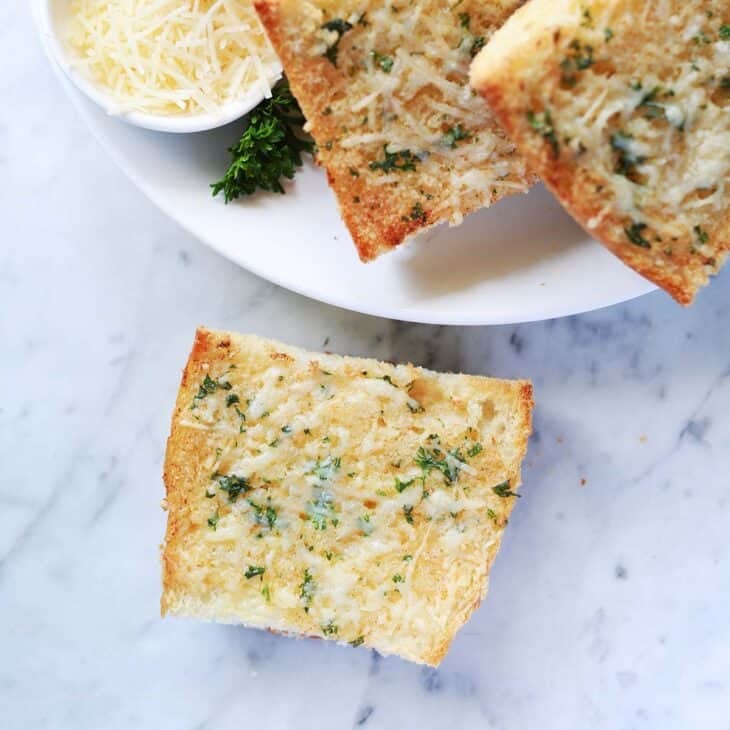
Garlic toast is a different preparation entirely. Individual slices are exposed to high, direct heat — a broiler, a toaster oven on convection, or a flat skillet — until the surface undergoes the Maillard reaction: the chemical browning that produces texture, color, and the specific flavor compounds associated with toasted bread. Without visible browning, there is no garlic toast. There is warm bread with garlic butter on it.
This distinction matters because the cooking parameters shift entirely. Garlic bread operates at 350–375°F over 15–20 minutes, often covered. Garlic toast typically requires 425–550°F over 3–8 minutes, uncovered. Treating one like the other produces either soft, unbrowned slices or dried-out, overcooked bread.
Why the Maillard Reaction Is the Whole Point
The Maillard reaction begins in most breads at approximately 280–300°F at the surface. For visible browning to occur on the timescale of toast — under 8 minutes — the surface temperature needs to reach and hold above 350°F consistently. A standard oven set to 350°F typically cannot produce genuine garlic toast in a reasonable time. The bread dries out before the surface develops meaningful color or structure.
This is why broiler temperatures matter. A broiler at 500–550°F exposes the bread surface to radiant heat that drives surface browning faster than the interior can dehydrate. If your standard bake setting produces pale, dry slices after 10 minutes, the fix is almost never more time — it is higher heat, closer to the element.
Garlic Application: The Decision Most Recipes Underspecify
Raw minced garlic behaves very differently under high heat than garlic powder or roasted garlic does. Small garlic pieces have limited thermal mass and a high surface-area-to-volume ratio that causes them to char rapidly — typically within 90 seconds under direct broiler heat at 500°F. The result is acrid, bitter flavor that overwhelms the bread and butter.
Garlic powder, dispersed evenly through butter fat, heats gradually and produces far less bitterness under high heat. Roasted garlic — which has already undergone caramelization — tolerates high heat better still and adds a mild sweetness that raw garlic never produces under these conditions.
For garlic toast specifically, garlic powder or roasted garlic mixed into room-temperature butter is generally the more reliable approach. Raw garlic works, but the timing window is narrower and the margin for error is considerably smaller.
How to Make Garlic Toast That Actually Crisps
The following method produces consistent results across bread types and oven configurations. It is not the only valid approach, but it addresses the specific failure points that appear most frequently in home kitchens.
The Butter Prep Step Most Recipes Skip
Butter temperature before spreading is the single most impactful variable in garlic toast, and most recipes do not address it directly. Cold butter — straight from the refrigerator — does not spread properly. It tears the bread surface, leaving thick clumps in some spots and bare patches in others. The clumps do not bond with the bread before the butter melts and runs off. The bare patches dehydrate under heat and produce dry, flavorless areas across the finished slice.
Room-temperature butter spreads in a thin, even layer that bonds with the bread surface and distributes flavor consistently from edge to edge. Pull butter from the refrigerator 30–45 minutes before use. If you need faster softening, cut it into small pieces and set them out — more surface area accelerates the process without risking partial melting.
Two butters worth naming specifically: Kerrygold Pure Irish Butter (unsalted, approximately $5–6 for 8oz) and Land O’Lakes European Style Butter ($5 for 7oz) both contain 84% butterfat, compared to the standard 80% in most American butters. The higher fat content means less water in the emulsion, which typically produces crispier, more evenly browned garlic toast. The difference is real but not essential — standard 80% butter works fine, it simply requires slightly closer attention to broiler timing.
Broiler Method: Step-by-Step (Yields 4 Slices)
- Soften 3 tablespoons unsalted butter to room temperature.
- Mix in 1/2 teaspoon garlic powder (or 2 tablespoons roasted garlic, mashed) and 1/4 teaspoon kosher salt. Optional: 1 tablespoon finely chopped fresh parsley.
- Spread approximately 1 tablespoon per slice, edge to edge, on one side of each slice. Even coverage matters more than quantity.
- Position oven rack 4–5 inches below the broiler element.
- Place slices butter-side up on a foil-lined baking sheet, spaced at least 1/2 inch apart. Do not crowd the pan.
- Broil on high (500–550°F) for 2–3 minutes. Watch continuously — the window between golden-brown and burnt is approximately 45–60 seconds.
- Optional: flip slices and toast the plain side for 60–90 seconds for full-surface crunch.
Total active time: under 10 minutes. The most common deviation that causes problems is walking away from the broiler, skipping the room-temperature butter step, or using bread thinner than 3/4 inch.
Which Bread Type Performs Best Under Heat
Sourdough is the default choice, and the gap between it and other options is significant for most applications. Its higher acidity and chewier gluten structure give it better resistance to drying out under high heat, and the crust browns evenly without becoming rock-hard the way a baguette typically does. Sourdough sliced 3/4 to 1 inch thick is the most forgiving and consistently rewarding option for garlic toast.
Bread Comparison by Heat Performance
| Bread Type | Typical Thickness | Browning Behavior | Interior After Toasting | Best Use |
|---|---|---|---|---|
| Sourdough (thick-sliced) | 3/4 to 1 inch | Even, controlled, golden | Chewy, not dry | Most applications |
| Pepperidge Farm Texas Toast | 1 inch (pre-cut) | Consistent, predictable | Soft white bread interior | Quick weeknight cooking |
| Italian white (Amoroso-style) | 1/2 to 3/4 inch | Fast browning, softer crust | Soft, slightly dense | Softer texture preference |
| French baguette (bias-sliced) | 1/2 to 3/4 inch | Very fast, hard exterior | Dense, can become dry | Crostini-style appetizers |
| Dave’s Killer Bread (21 Whole Grains) | ~1/2 inch | Slower, denser crumb | Hearty, slightly chewy | Higher-nutrition preference |
| Standard sandwich bread (thin) | Under 1/2 inch | Dehydrates before browning | Dry, crackerlike | Not recommended |
Pepperidge Farm Texas Toast deserves its own note. At a pre-cut 1-inch thickness, it absorbs the garlic-butter mixture without becoming soggy, browns predictably under a broiler, and requires no slicing or prep. For quick weeknight garlic toast, it is genuinely the most reliable option — even without the flavor depth of sourdough. A box costs under $4 at most grocery stores.
Standard thin sandwich bread is the one type to avoid for this preparation. At under 1/2 inch, it dehydrates before meaningful surface browning can occur. The result is dry and crackerlike rather than the crispy-exterior, tender-interior texture that garlic toast is supposed to deliver.
One additional consideration: bread that has begun to stale — one to two days past peak freshness — actually performs better for garlic toast than very fresh bread. Slightly drier bread absorbs butter more evenly and browns more predictably. Day-old sourdough is, in most cases, the best raw material available.
Four Mistakes That Produce Bad Garlic Toast
Most garlic toast failures trace back to four specific, identifiable errors. Not general technique issues — four discrete problems, each with a direct fix.
Mistake 1: Raw Minced Garlic Directly on High Heat
Raw garlic pieces char at approximately 350°F when directly exposed to broiler radiant heat. Under a 500°F broiler, small minced pieces typically burn within 90 seconds — faster than the bread surface can develop proper browning. The result is acrid, bitter flavor that dominates everything else on the slice.
Two reliable fixes: switch to garlic powder or roasted garlic in the butter compound (both tolerate high heat far better), or apply raw garlic after toasting by pressing it into the hot butter-coated surface immediately after the toast comes out of the oven. The residual heat blooms the garlic flavor without burning it.
Mistake 2: Cold or Melted Butter Instead of Room-Temperature
Cold butter tears the bread surface and distributes unevenly. Melted butter pools toward the center and soaks in before it can bond with the surface, with excess running off the edges entirely. Room-temperature butter — soft enough to spread with light pressure without being greasy — is the only form that produces even, consistent coverage across the entire slice.
Add garlic powder, salt, and any herbs to softened butter before spreading, not after. Adding dry ingredients to cold butter leaves unincorporated clumps that distribute unevenly and create inconsistent flavor across the finished slice.
Mistake 3: Wrong Rack Position Under the Broiler
Too close — 2 inches or less from the element — and the surface chars before the bread has any internal warmth. Too far — 6 inches or more — and the bread dehydrates before the surface browns. The range that works in most home ovens is 4 to 5 inches from the broiler element, where radiant heat is intense enough to brown the surface without instantly burning it.
Most broiler drawers, positioned separately beneath the main oven cavity, place bread approximately 3 inches from the element by default. If using a broiler drawer rather than the oven broiler, expect browning to occur in under 2 minutes and stay with the bread throughout.
Mistake 4: Covering the Bread During Cooking
Some garlic bread recipes suggest tenting foil over the bread while it heats. This traps steam, softens the bread interior, and prevents the Maillard reaction from occurring at the surface. Garlic toast requires open, dry heat throughout — no covering, no tenting. If a recipe tells you to cover the bread during cooking, that recipe is producing garlic bread, not toast.
A related mistake: overcrowding the baking sheet. Slices placed too close together trap steam between them, which prevents the edges and corners from browning properly. Space slices at least 1/2 inch apart on the pan.
Garlic Toast vs. Garlic Bread: Direct Comparison
Neither preparation is better in every context. Garlic toast suits pasta sides, appetizer trays, and any dish where textural contrast matters. Garlic bread suits brothy soups, heavily sauced pastas, and any situation where soft, sauce-absorbent bread is more appropriate than a crunchy one.
| Factor | Garlic Toast | Garlic Bread |
|---|---|---|
| Final texture | Crispy exterior, chewy interior | Soft throughout |
| Cooking temperature | 425–550°F, uncovered | 350–375°F, often foil-wrapped |
| Active cook time | 5–8 minutes | 15–20 minutes |
| Best garlic type | Garlic powder or roasted garlic | Raw minced garlic works well |
| Best bread | Sourdough, Pepperidge Farm Texas Toast | French loaf, Italian loaf |
| Best food pairing | Pasta, salads, soups, appetizer trays | Lasagna, brothy stews, soft sides |
| Margin for error | Narrow — close broiler attention required | Wide — more forgiving |