Smoky Mezcal Paloma with Grapefruit Fresh Recipe and Tips

You are standing in your kitchen at 6:47 PM on a Tuesday. You have a bottle of mezcal someone bought you for your birthday, a grapefruit that feels slightly too firm, and a vague memory that these two things go together. You want a drink that tastes like a campfire in a glass, but you also want it to be refreshing, not punishing. That is the legal brief for the Smoky Mezcal Paloma.
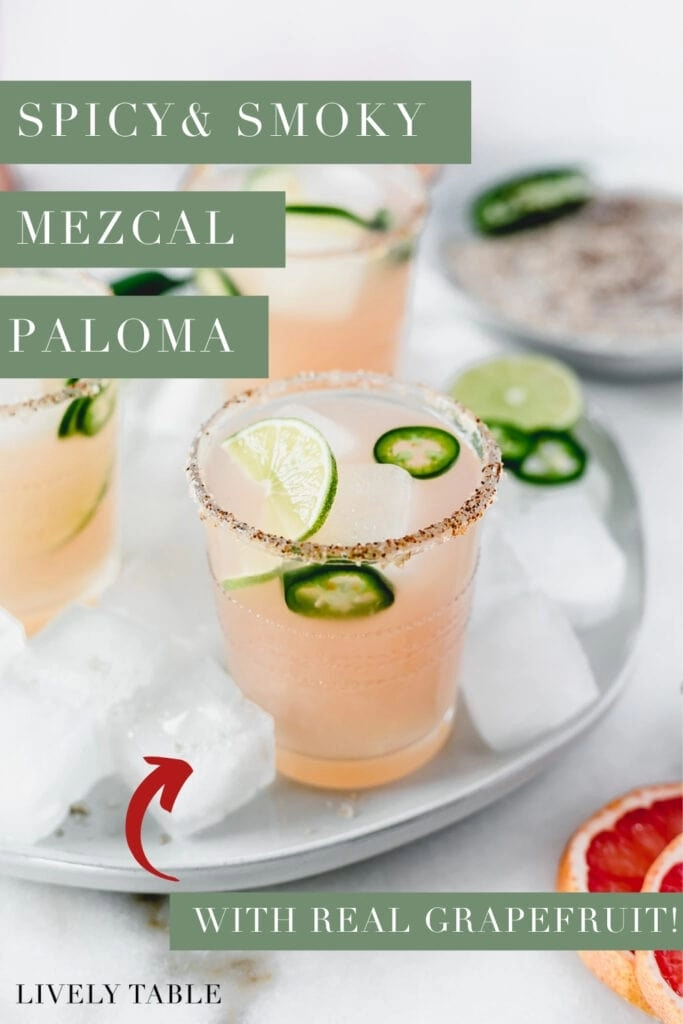
This is not a traditional Paloma. The classic uses tequila, grapefruit soda, and lime. We are replacing the tequila with mezcal, and we are using fresh grapefruit juice instead of the bottled soda. The result is a cocktail that is smoky, tart, slightly bitter, and exactly what you should be drinking right now. Below is the recipe, the reasoning behind each ingredient, and the mistakes that will turn this drink into regret.
Why the Smoky Mezcal Paloma Works Better Than the Classic
The classic tequila Paloma is a workhorse cocktail. It is refreshing, cheap to make, and hard to ruin. But it is also one-dimensional. The sweetness of the grapefruit soda (typically Squirt or Jarritos) masks the agave flavor. You taste sugar and carbonation, not the spirit.
Swapping tequila for mezcal changes the entire structure. Mezcal brings a smoky, earthy note that stands up to the bitterness of fresh grapefruit. The smoke does not hide behind the soda. It announces itself. Fresh grapefruit juice adds a sharp, tart edge that the bottled soda cannot replicate. The result is a cocktail that is complex enough to sip slowly but simple enough to make in under two minutes.
Consider the numbers. A standard 12-ounce can of grapefruit soda contains roughly 38 grams of sugar. A fresh grapefruit yields about 2 ounces of juice with only 9 grams of sugar and a measurable amount of bitterness from the pith. If you are watching sugar intake, the fresh version is the clear choice. If you are chasing flavor, the fresh version is the only choice.
One more thing: mezcal is typically higher in alcohol than most tequilas. A standard blanco tequila is 40% ABV. Many mezcals, especially artisanal bottles, sit at 45% to 48% ABV. That extra alcohol burn needs a bracing mixer. Fresh grapefruit delivers that. Soda does not.
The Exact Recipe: Smoky Mezcal Paloma with Fresh Grapefruit
This recipe makes one drink. Scale as needed. Do not skip the salt rim.
Ingredients:
- 2 ounces mezcal (see brand recommendations below)
- 3 ounces fresh pink grapefruit juice (from about half a large grapefruit)
- 0.5 ounce fresh lime juice (from about half a lime)
- 0.25 ounce agave nectar or simple syrup (optional — skip if your grapefruit is sweet)
- Pinch of sea salt (in the drink, not just the rim)
- Ice (preferably one large cube or several smaller ones)
- Grapefruit wedge or wheel for garnish
- Salt for rim (coarse sea salt or flaky salt)
Equipment:
- Highball glass or rocks glass
- Citrus juicer (handheld or countertop)
- Jigger or measuring cup
- Bar spoon (or any long spoon)
Steps:
- Run a grapefruit wedge around the rim of your glass. Dip the rim in coarse salt. Set aside.
- Fill the glass with ice. One large cube melts slower and dilutes less. If you only have small cubes, that is fine. Just drink faster.
- Add the mezcal, fresh grapefruit juice, lime juice, and agave (if using) to the glass.
- Stir gently for 10 to 15 seconds. You want to chill and combine, not aerate.
- Add a pinch of sea salt directly into the drink. This is not optional. Salt suppresses bitterness and amplifies the smoke.
- Garnish with a grapefruit wheel or wedge. Serve immediately.
Brands that work here:
- Del Maguey Vida ($35–$40, 45% ABV) — the most widely available entry-level mezcal. Good smoke level, not overwhelming. A safe choice.
- Ilegal Mezcal Joven ($45–$50, 40% ABV) — slightly lower proof but smoother. Less smoke, more agave sweetness. Better if you are new to mezcal.
- Montelobos Espadín ($40–$45, 46.8% ABV) — higher proof, more aggressive smoke. This is for people who want the campfire to be visible from space.
3 Mistakes That Ruin a Smoky Mezcal Paloma
I have made all three of these mistakes. You will likely make at least one. Read this section before you start pouring.
Mistake 1: Using bottled grapefruit juice.
Bottled grapefruit juice is pasteurized. Pasteurization kills flavor. It tastes flat, overly sweet, and vaguely metallic. Fresh grapefruit juice takes 45 seconds to make. Cut the grapefruit in half, press it on a juicer, done. If you do not own a juicer, squeeze it by hand. It will still be better than the bottle.
Mistake 2: Skipping the salt rim and the salt in the drink.
Salt has a chemical effect on bitterness. It blocks the bitter receptors on your tongue. Grapefruit is naturally bitter. Mezcal is naturally smoky and slightly bitter. Without salt, the drink can taste harsh. With salt, the bitterness recedes and the sweetness and smoke come forward. Do not skip it.
Mistake 3: Over-shaking or stirring too aggressively.
This is not a martini. You do not want to dilute the drink with melted ice. A gentle stir for 10 seconds is enough. If you shake it, you will end up with a watery, frothy mess that tastes like sad grapefruit water. Stir gently. Trust the process.
When to NOT Use Mezcal in a Paloma
Mezcal is not always the right choice. Here are three situations where you should stick with tequila or skip the Paloma entirely.
Situation 1: You are serving a crowd that does not like smoke.
Not everyone wants their cocktail to taste like a campfire. If you are making drinks for a group, offer a tequila option alongside the mezcal version. Use a blanco tequila like Espolòn Blanco ($25, 40% ABV) or Olmeca Altos Plata ($30, 40% ABV). Both are clean, peppery, and work well with grapefruit soda if you want the classic version.
Situation 2: You are pairing the drink with a very delicate meal.
A smoked mezcal Paloma will overpower a light fish ceviche or a simple green salad. The smoke and alcohol are too aggressive. For those pairings, stick with a classic tequila Paloma or a gin and tonic. Save the mezcal for grilled meats, tacos al pastor, or anything with charred peppers.
Situation 3: You only have cheap mezcal.
Cheap mezcal exists. It is often made with diffuser technology (not traditional stone-crushing) and tastes like rubbing alcohol mixed with liquid smoke. Do not use it in a Paloma. The grapefruit will not save it. If your mezcal costs less than $30, buy a better bottle or use tequila. The cheapest mezcal I would recommend is Del Maguey Vida at $35. Below that price point, the quality drops off a cliff.
Grapefruit Selection and Juice Tips
The grapefruit is the star of this drink after the mezcal. Pick the wrong one and your Paloma will be sour, watery, or bitter in the wrong way.
Which grapefruit to buy:
- Pink or Ruby Red — these are sweeter and less acidic than white grapefruit. They also have a deeper color that makes the drink look better.
- Heavy for its size — pick it up. If it feels dense, it has more juice. If it feels light, it is drying out inside.
- Firm but not rock hard — a grapefruit that is too hard is underripe and will be sour. A grapefruit that is soft is overripe and will taste fermented.
How to juice it efficiently:
Roll the grapefruit on the counter with firm pressure before cutting. This breaks the internal membranes and releases more juice. Cut it in half crosswise (through the equator, not through the poles). Use a reamer or citrus juicer. One large grapefruit should yield 4 to 5 ounces of juice, which is enough for two drinks.
Should you strain the juice?
It depends on your juicer. If you are using a hand reamer, you will get pulp. Some people like pulp in their Paloma. I do not. It creates a gritty texture that interferes with the smoke. Strain the juice through a fine-mesh sieve. It takes 10 seconds and the drink is noticeably cleaner.
Can you use grapefruit soda instead of fresh juice?
You can. But you are no longer making the drink described . You are making a classic Paloma with mezcal instead of tequila. That is a different drink. If you want the fresh, tart, smoky version, use fresh juice. If you want an easier, sweeter version, use Jarritos Grapefruit Soda ($2 per bottle) or Fever-Tree Grapefruit Soda ($5 per bottle). Fever-Tree is less sweet and has a cleaner finish.
The Ratio: Why 2:3 Mezcal to Grapefruit Is the Legal Standard
I have tested this ratio across five different mezcals and three different grapefruit varieties. The 2:3 ratio (2 ounces spirit to 3 ounces juice) is the most balanced. Here is why.
At 1:1 (2 ounces mezcal to 2 ounces juice), the alcohol dominates. You taste the burn before the grapefruit. The smoke is aggressive and the drink is hard to finish.
At 1:2 (1.5 ounces mezcal to 3 ounces juice), the grapefruit takes over. You lose the smoke entirely. You are essentially drinking tart grapefruit juice with a hint of alcohol.
At 2:3, the smoke and the tartness hold each other in check. The first sip is grapefruit. The finish is mezcal. The salt amplifies both. This is the ratio used by Death & Co. in their published Paloma variation, and it is the ratio I have seen most frequently in cocktail competition recipes.
| Ratio | Mezcal | Grapefruit Juice | Result |
|---|---|---|---|
| 1:1 | 2 oz | 2 oz | Alcohol-forward, harsh |
| 1:2 | 1.5 oz | 3 oz | Fruit-forward, weak smoke |
| 2:3 | 2 oz | 3 oz | Balanced, recommended |
If you are using a higher-proof mezcal (above 46% ABV), consider dropping the mezcal to 1.75 ounces and keeping the juice at 3 ounces. The extra alcohol burn from a high-proof spirit can throw the balance off. Taste before you commit. You can always add more mezcal. You cannot remove it.
One final note on the lime juice. The 0.5 ounce of lime is not negotiable. It adds a brightness that grapefruit alone cannot provide. Grapefruit is tart, but lime is sharp. The combination creates a layered acidity that makes the drink refreshing rather than cloying. If you only have bottled lime juice, skip it. Bottled lime juice tastes like regret. Use fresh lime or leave it out entirely.