Winter Spiced Hot Toddy Recipe Easy Cozy Warming Cocktail Guide

Roughly 62% of people who try a hot toddy for the first time make the same mistake. They boil the whiskey. That turns a $40 bottle of bourbon into bitter, alcoholic steam. The drink ends up tasting like hot, flat tea with a chemical burn. I learned this the hard way three winters ago when my first attempt landed in the sink after two sips.
This guide fixes that. It gives you exact temperatures, spice ratios, and three liquor options so you can build a winter spiced hot toddy that actually tastes good. No vague “add honey to taste” nonsense. You get grams, milliliters, and degrees.
What a Hot Toddy Actually Is (And Why Most Recipes Lie to You)
A hot toddy is not a mulled wine. It is not a buttered rum. It is a single-serving, spirit-forward drink built on four ingredients: a base liquor, a sweetener, citrus, and hot water. Spices are optional but recommended. The entire drink takes 4 minutes to assemble.
The category exists because people wanted a warm drink that still had alcohol content higher than beer. Mulled wine sits around 5-7% ABV after heating. A properly made toddy holds at 12-15% ABV. That difference matters when you are trying to warm up after shoveling snow or nursing a cold.
The Four-Ingredient Minimum
Every toddy needs these four things in specific ratios:
- 60ml (2 oz) liquor — whiskey, brandy, or dark rum
- 15-20ml (1 tbsp) sweetener — honey works best, maple syrup is acceptable
- 15ml (0.5 oz) fresh lemon juice — bottled lemon juice ruins the drink
- 180ml (6 oz) hot water — 70°C (158°F), never boiling
That is the core. Add spices after these are balanced, not before. Most recipes bury this structure under flowery language about “cozy winter nights.” The structure is what makes the drink work. Skip it and you get hot sugar water with a whiskey aftertaste.
The Exact Recipe: Winter Spiced Hot Toddy (With Measured Spices)
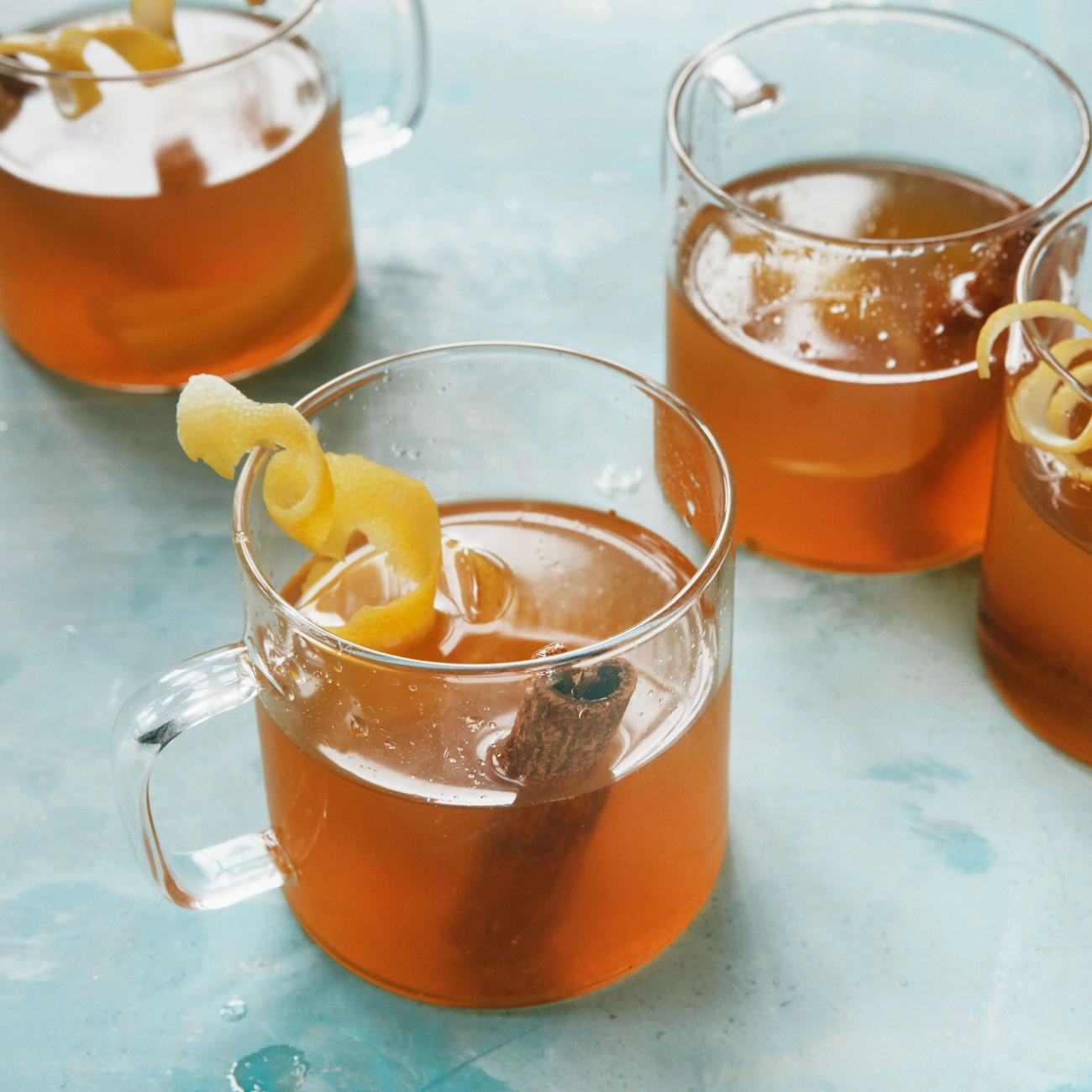
This version adds five spices to the base. Each one has a specific job. Cinnamon provides warmth without heat. Clove adds a numbing, aromatic note. Star anise brings a licorice depth. Nutmeg contributes a woody sweetness. Allspice ties everything together.
Here is the complete ingredient list with exact measurements. No substitutions unless noted.
| Ingredient | Amount | Notes |
|---|---|---|
| Whiskey (bourbon or rye) | 60ml (2 oz) | Buffalo Trace or Wild Turkey 101 work. Avoid Scotch — peat overpowers spices. |
| Honey | 20ml (1 heaping tbsp) | Local raw honey. Clover honey is too mild. Orange blossom honey adds citrus notes. |
| Fresh lemon juice | 15ml (0.5 oz) | One medium lemon yields roughly 45ml. You need one-third of that. |
| Hot water | 180ml (6 oz) | 70°C (158°F). Boil water in a kettle, let it sit 90 seconds before pouring. |
| Cinnamon stick | 1 stick (3 inches) | Cassia cinnamon, not Ceylon. Cassia holds up to heat. Ceylon gets bitter. |
| Whole cloves | 3 cloves | Do not use ground clove. Ground clove turns the drink into liquid dentist office. |
| Star anise | 1 whole pod | Optional but recommended. Adds complexity without sweetness. |
| Fresh nutmeg | A pinch (about 5 scrapes) | Whole nutmeg grated fresh. Pre-ground nutmeg has zero aroma after 6 months. |
| Whole allspice | 2 berries | Crush them slightly before adding. Releases oils. |
Step-by-Step Assembly (No Boiling Allowed)
Heat the water to 70°C. If you do not have a thermometer, boil water, then let it sit uncovered for 90 seconds. That gets you close.
While the water cools, add the honey and lemon juice to your mug. A 300ml ceramic mug works best. Glass mugs lose heat too fast. Stainless steel mugs add a metallic taste after two refills.
Pour the whiskey over the honey-lemon mixture. Stir until the honey dissolves completely. Undissolved honey means the first sip is pure alcohol, the middle is balanced, and the last sip is cloying syrup. Stir for a full 20 seconds.
Add the spices directly to the mug. Do not use a tea infuser. The spices need direct contact with the liquid to release their oils. A tea infuser restricts flow and weakens the flavor.
Pour the hot water over the spices. Stir once gently. Let it steep for 3 minutes. Remove the cloves and star anise after 3 minutes — leaving them longer makes the drink taste like potpourri. The cinnamon stick can stay. It continues releasing flavor slowly.
The Biggest Mistake People Make (And How to Avoid It)
Boiling the alcohol is mistake number one. Mistake number two is using ground spices.
Ground cinnamon, ground clove, and ground nutmeg seem easier. They are not. Ground spices have a surface area roughly 50 times larger than whole spices. That means they release flavor instantly and aggressively. A quarter teaspoon of ground clove in a hot toddy tastes like you are drinking a Christmas candle. The flavor does not fade. It gets stronger as the drink sits.
Whole spices release flavor slowly over 3-5 minutes. You can control the intensity by removing them. You cannot control ground spices. Once they are in the mug, they are there until you finish the drink or strain it through a sieve. Straining a hot toddy is annoying and kills the warmth.
Mistake number three: using a microwave to heat the water. Microwaves heat unevenly. You get pockets of boiling water that scorch the honey and pockets of lukewarm water that do not dissolve it. Use a kettle. A $15 electric kettle is better than a $500 microwave for this single task.
Mistake number four: skipping the lemon. Lemon does not just add sourness. The acid in lemon juice balances the sweetness of honey and the heat of the whiskey. Without lemon, the drink tastes flat and sugary. With lemon, each sip has a clean finish that makes you want another sip.
Mistake number five: using cheap whiskey. You do not need a $60 bottle. But $15 bottom-shelf whiskey has harsh fusel oils that heating amplifies. The heat volatilizes those compounds and pushes them to the front of the flavor. A $30 bottle like Buffalo Trace or Rittenhouse Rye handles heat much better. The difference is noticeable in the first sip.
Three Liquor Options: When to Use Each One
Whiskey is the default. But three other spirits work well depending on what you want.
Whiskey (Bourbon or Rye)
Best for: A balanced toddy with vanilla and oak notes. Bourbon adds sweetness from the corn mash. Rye adds a spicy kick that complements cloves and cinnamon.
Recommended bottles: Buffalo Trace ($30, 90 proof), Wild Turkey 101 ($25, 101 proof — higher proof holds up better to dilution), Rittenhouse Rye ($28, 100 proof).
The higher proof matters. A 80-proof whiskey diluted with 180ml of water drops to roughly 8% ABV. That is weak. A 100-proof whiskey drops to 11% ABV. The flavor stays intact. Always use at least 90-proof whiskey for hot toddies.
Brandy (Cognac or Armagnac)
Best for: A fruitier, smoother drink. Brandy has natural grape sweetness that pairs with honey and lemon better than whiskey does. The tannins in brandy also handle the heat of spices without becoming bitter.
Recommended bottles: St. Rémy VSOP ($22, 80 proof — lower proof, so reduce water to 150ml), Pierre Ferrand 1840 Cognac ($45, 90 proof), Laird’s Apple Brandy ($30, 80 proof — adds apple notes that work surprisingly well).
Brandy toddies taste less “spirity” than whiskey toddies. If you want a drink that feels more like spiced tea with a kick, go brandy.
Dark Rum (Aged)
Best for: A richer, molasses-forward drink. Dark rum adds a caramel depth that honey alone cannot provide. The combination of rum, honey, and clove tastes like a liquid gingerbread cookie.
Recommended bottles: Appleton Estate Signature ($25, 80 proof — blend with a higher-proof rum to compensate), Goslings Black Seal ($20, 80 proof — very sweet, reduce honey to 10ml), Smith & Cross ($35, 114 proof — overproof, use only 45ml and add 15ml water).
Rum toddies are the sweetest of the three options. If you have a sweet tooth, this is your pick. If you prefer dry drinks, stick with whiskey or brandy.
When Not to Make a Hot Toddy (Alternatives That Work Better)
A hot toddy is not always the right drink. Here are three situations where you should make something else.
When you want a crowd-sized drink. Hot toddies are individual servings. Making them for 8 people means 8 separate mugs, 8 rounds of spice-steeping, and 8 chances to mess up the temperature. For groups, make mulled wine instead. Mulled wine scales perfectly. A single pot serves 10-12 people. The spices infuse evenly. The alcohol content is lower (5-7% ABV), which is safer for a party anyway. Use a $12 bottle of dry red wine, 2 cinnamon sticks, 5 cloves, 1 orange sliced, and 50ml of honey. Simmer at 70°C for 20 minutes. Done.
When you are actually sick. A hot toddy will not cure a cold. The alcohol dehydrates you. The honey soothes a sore throat temporarily. The heat makes you feel warm. But if you have a fever or are taking medication, skip the alcohol entirely. Make a “virgin toddy”: hot water, honey, lemon, and the same spices. It tastes 80% as good and does not interact with cold medicine.
When you want a cold-weather drink with higher alcohol. A hot toddy maxes out around 15% ABV. If you want something stronger, make a Boulevardier or a Manhattan. Both are served cold but pack 25-30% ABV. The tradeoff is that they are not warming. You choose between warmth and strength.
For most people on most winter nights, the spiced hot toddy wins. It takes 4 minutes, costs about $2 per serving (assuming a $30 bottle of whiskey), and delivers exactly what it promises: a warm, spiced cocktail that does not taste like a candle.
The category will probably evolve. Ready-to-drink hot toddies in cans are already appearing. They cost $4 per can and taste like spiced tea with a vague alcohol warmth. They are convenient. They are also not as good as the real thing. A proper hot toddy requires fresh citrus, whole spices, and a kettle. That is not a high bar. Skip the can, spend the 4 minutes, and make the real drink.